Bill · H.R. 5154· House(119-HR-5154)
REACT Act
- Introduced
- 9/4/2025
- Last activity
- 9/5/2025 — Referred to the Subcommittee on Economic Development, Public Buildings, and Emergency Management.
- Sponsored by
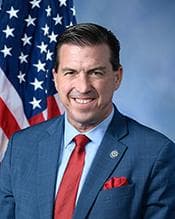
- Kevin Mullin
- Cosponsors
- - 2 - 1
- Introduced
- In Committee
What this bill would do
The REACT Act requires the FEMA Administrator to create a program providing technical and financial help to State, local, and Tribal authorities. This program focuses on testing emergency alert and warning systems through field training and community exercises. It includes developing message templates, training on best practices, and creating public education campaigns. The Administrator must submit an operational plan and annual reports to Congress. The program is authorized for $30,000,000 annually from 2025 through 2035.
Yes· 3 of 19
Does this improve help for people hit by a disaster?+8
Directly improves FEMA's capacity to support states and tribes in testing and operating emergency warning systems.
Would Native Americans be better off under this?+7
Specifically provides technical and financial assistance to Tribal authorities for emergency alerting.
Would people in rural areas be better off under this?+5
Directly supports local and tribal authorities in improving alert reach in rural areas.
The opposite
Does this reduce what the federal government owes?-1
The bill authorizes additional spending of $30 million annually.
Does this reduce what the federal government spends?-1
The bill increases government spending to fund the new program.
Who it would affect, and how
Potential Positive Impacts for People
-
Improved Alert Effectiveness: Section 2(b)(3) and (4) provide for evidence-based message templates and training on best practices for crafting and disseminating alerts, which can make warnings clearer.
-
Better System Coordination: Section 2(b)(2) assists in establishing clear roles and standard operating procedures across local, Tribal, State, and Federal authorities to streamline the alert chain.
-
Increased Public Awareness: Section 2(b)(7) provides technical assistance for public education campaigns that explain how systems work and how individuals should respond to alerts.
-
Reliable Technology: Section 2(b)(6) ensures technology and infrastructure are working effectively through testing of multimodal capabilities.
Potential Negative Impacts for People
- No negative impacts for people are explicitly mentioned in the provided text.
Groups and Interests Ranking
Every group the model scored this bill for, from -10 to +10. Hover a score for the reason it gave.
- Demographic And Interest Groups
- Good For Native Americans+7Good For Rural Residents+5Good For People With Disabilities+4Good For Low Income Households+3Good For Retirees+3Good For Seniors+3Good For Urban Residents+3Good For Children+2Good For Farmers+2Good For High Income Households+2Good For Middle Aged+2Good For Middle Class Households+2Good For Young Adults+2
- Environment Energy And Infrastructure
- Improves Disaster Relief And F E M A+8Improves Rural Development+3
- Governance And Ideology
- Improves Government Transparency+3Increase States Rights+2Increases Federal Power+1
- Economy And Finance
- Reduces Government Spending-1Reduces National Debt-1
- Healthcare
- Improves Pandemic Preparedness+2
- 10/3/2025
- 1 Cosponsor added.
- 9/5/2025
- Referred to the Subcommittee on Economic Development, Public Buildings, and Emergency Management.
- 9/4/2025
- Referred to the House Committee on Transportation and Infrastructure.
- 2 Cosponsors added.
- Introduced in House
 Ed Case
Democrat · Hawaii
 Nancy Pelosi
Democrat · California
 Randy Weber
Republican · Texas