Bill · H.R. 5057· House(119-HR-5057)
Expanding Service Coordinators Act of 2025
- Introduced
- 8/26/2025
- Last activity
- 8/26/2025 — Referred to the Committee on Financial Services, and in addition to the Committee on Education and Workforce, for a period to be subsequently determined by the Speaker, in each case for consideration of such provisions as fall within the jurisdiction of the committee concerned.
- Sponsored by
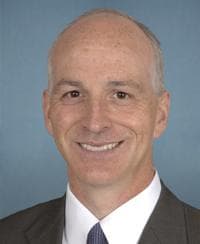
- Adam Smith
- Cosponsors
- - 3 - 0
- Introduced
- In Committee
What this bill would do
The Expanding Service Coordinators Act of 2025 amends the Housing and Community Development Act of 1992 and other laws to expand service coordinator programs in federally assisted housing. It prevents the Secretary from adding extra requirements on housing projects to get these funds, while still allowing reasonable reporting and compliance. The bill requires housing project owners to reserve at least $2,500 annually for service coordinator training and mandates annual reporting on that training. It authorizes billions in appropriations across several fiscal years for programs, grants, and public and Indian housing services. Additionally, it creates competitive grant programs for section 202 and section 515 properties, makes service coordinators eligible for Public Service Loan Forgiveness, and establishes Health Resources and Services Administration grants for specific properties.
Yes· 3 of 25
Would people over 65 be better off under this?+5
The bill explicitly prioritizes properties serving elderly residents and programs promoting aging in place.
Would households on low incomes be better off under this?+5
The legislation directly supports low-income individuals residing in federally assisted, public, and rural housing.
Would people with disabilities be better off under this?+5
The legislation grants priority to properties serving disabled residents and helps them access supportive services.
The opposite
Does this reduce what the federal government spends?-2
The bill authorizes billions in appropriations across several fiscal years for new and expanded grant programs.
Would business owners be better off under this?-1
Housing project owners face a mandatory financial reserving requirement of at least $2,500 annually for training.
Who it would affect, and how
Potential Positive Impacts for People
-
Training Funds for Service Coordinators: Section 2(b) adds Section 678(a), requiring housing project owners to reserve at least $2,500 annually for service coordinators to access training. This ensures coordinators can improve their skills to better help residents.
-
Protection of Resident Choice: Section 2(d) adds Section 202C(h), and Section 6 adds Section 515A(h), stating that no resident may be required to accept any service provided through a service coordinator. This protects personal autonomy for individuals living in assisted housing.
-
Priority for Vulnerable Areas: Section 2(d) adds Section 202C(e) and Section 6 adds Section 515A(e), directing the Secretary to give priority for grants to properties serving elderly or disabled residents, or those located in persistent poverty counties or underserved rural areas. This targets resources toward the people who need them the most.
-
Student Loan Relief for Workers: Section 3 amends Section 455(m)(3)(B)(i) of the Higher Education Act of 1965 to include public service as a service coordinator under Public Service Loan Forgiveness eligibility. This helps workers pay off their student loans while working in public service.
Potential Negative Impacts for People
-
Mandatory Reporting Burdens: Section 2(b) adds Section 678(b), which requires service coordinators to submit annual training information to the Secretary. This creates extra paperwork and administrative tasks for workers who are already busy helping residents.
-
Financial Reserving Mandate for Owners: Section 2(b) adds Section 678(a), forcing owners of federally assisted housing projects to set aside at least $2,500 of their received funds strictly for training. Smaller property owners might find this mandatory carve-out a tight squeeze on their operational budgets.
Groups and Interests Ranking
Every group the model scored this bill for, from -10 to +10. Hover a score for the reason it gave.
- Demographic And Interest Groups
- Good For Low Income Households+5Good For People With Disabilities+5Good For Seniors+5Good For Retirees+4Good For Rural Residents+4Good For Students+3Good For Young Adults+3Good For African Americans+2Good For Children+2Good For Hispanic Americans+2Good For Middle Aged+2Good For Native Americans+2Good For Urban Residents+2Good For Veterans+2Good For Women+2Good For Business Owners-1
- Social Issues And Justice
- Improves Affordable Housing+5Improves Disability Rights+3Improves Poverty Reduction+3Reduces Homelessness+2
- Healthcare
- Improves Healthcare Access+3Improves Mental Health Access+2
- Education And Technology
- Improves Student Loan Relief+4
- Environment Energy And Infrastructure
- Improves Rural Development+4
- Governance And Ideology
- Improves Government Transparency+2
- Economy And Finance
- Increases Job Creation+3Reduces Government Spending-2
- 11/12/2025
- 1 Cosponsor added.
- 8/26/2025
- Referred to the Committee on Financial Services, and in addition to the Committee on Education and Workforce, for a period to be subsequently determined by the Speaker, in each case for consideration of such provisions as fall within the jurisdiction of the committee concerned.
- 2 Cosponsors added.
- Introduced in House
 Suzanne Bonamici
Democrat · Oregon
 Joyce Beatty
Democrat · Ohio
 Shri Thanedar
Democrat · Michigan