Bill · H.R. 4878· House(119-HR-4878)
MOSSA Act
- Introduced
- 8/5/2025
- Last activity
- 8/5/2025 — Referred to the Committee on the Judiciary, and in addition to the Committees on Energy and Commerce, and Financial Services, for a period to be subsequently determined by the Speaker, in each case for consideration of such provisions as fall within the jurisdiction of the committee concerned.
- Sponsored by
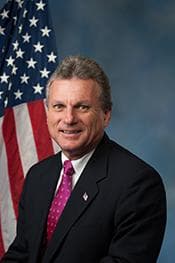
- Earl Carter
- Cosponsors
- - 3 - 0
- Introduced
- In Committee
What this bill would do
The "Make Our Streets Safe Again Act" (MOSSA Act) aims to reduce crime and disorder on American streets. It directs the Attorney General and various secretaries to prioritize civil commitment for individuals with mental illness who are a danger to themselves or others or are living on the streets. The bill seeks to prioritize grant funding for states and municipalities that enforce prohibitions on drug use, urban camping, and loitering. It also directs agencies to shift away from "housing first" and "harm reduction" policies in favor of treatment-based models. Additionally, the act increases accountability for homelessness programs regarding substance use and mental health requirements. Finally, it provides for the removal of encampments and stricter oversight of sex offender registration and housing.
Yes· 3 of 9
Does this make mental health care easier to get?+5
The bill prioritizes assistance for civil commitment and institutional treatment for those with serious mental illness.
Would children be better off under this?+5
The bill allows for the prioritization of housing programs that exclusively house women and children away from sex offenders.
Is this likely to reduce homelessness?+4
The bill aims to reduce visible homelessness through encampment removal and stricter enforcement of urban camping bans.
The opposite· 3 of 8
Does this protect people from being watched or searched?-6
The bill encourages the collection and sharing of health-related data with law enforcement.
Does this make housing cost less?-5
The bill shifts housing policy away from 'housing first' models toward mandatory treatment requirements.
Would households on low incomes be better off under this?-5
The bill increases requirements and enforcement that may disrupt access to existing social safety nets.
Who it would affect, and how
Potential Positive Impacts for People
-
Improved Treatment for Mental Illness: The Attorney General and Secretary of Health and Human Services are directed to assist state and local governments in implementing flexible civil commitment and treatment standards for those living on the streets who cannot care for themselves (Section 2(a)).
-
Focus on Recovery and Self-Sufficiency: The bill directs the end of support for "housing first" policies to promote treatment, recovery, and self-sufficiency (Section 2(d)(1)(A)).
-
Increased Safety for Children: The Secretary of Housing and Urban Development may revise regulations to allow federally funded programs to exclusively house women and children, preventing sex offenders from being housed with unrelated children (Section 2(d)(4)).
-
Expansion of Specialized Courts: The Attorney General is tasked with prioritizing funding for drug courts and mental health courts to serve public safety (Section 2(c)(2)).
-
Enhanced Medical Care through Data: Funding recipients may be required to collect and use health data to provide appropriate medical care to individuals with mental health diagnoses (Section 2(d)(5)(B)).
Potential Negative Impacts for People
-
Increased Civil Commitment: The bill seeks to reverse judicial precedents and terminate consent decrees to encourage the civil commitment of individuals with mental illness (Section 2(a)(1)).
-
Restrictions on Substance Use Programs: The Secretary of Health and Human Services is directed to ensure that grants do not fund "harm reduction" or "safe consumption" efforts (Section 2(c)(1)(A)).
-
Mandatory Treatment Requirements: Recipients of Federal housing and homelessness assistance may be required to make substance abuse treatment or mental health services a condition of participation (Section 2(d)(2)).
-
Potential Loss of Assistance: The Secretary of Housing and Urban Development may freeze assistance for recipients that operate drug injection sites or "safe consumption sites" (Section 2(d)(3)(B)).
-
Increased Enforcement of Prohibitions: Grant priority may be given to jurisdictions that enforce prohibitions on urban camping, loitering, and open illicit drug use (Section 2(b)(1)).
Groups and Interests Ranking
Every group the model scored this bill for, from -10 to +10. Hover a score for the reason it gave.
- Social Issues And Justice
- Reduces Homelessness+4Improves Affordable Housing-5Improves Disability Rights-4Improves Criminal Sentencing Reform-3Improves Poverty Reduction-3Improves Policing Reform-2
- Healthcare
- Improves Mental Health Access+5Improves Opioid Crisis Response+3Improves Healthcare Access+2
- Governance And Ideology
- Improves Government Transparency+2Improves Privacy Rights-6
- Demographic And Interest Groups
- Good For Children+5Good For Women+4Good For Urban Residents+3Good For Low Income Households-5Good For People With Disabilities-5
- Economy And Finance
- Improves Economic Growth+1
- 8/5/2025
- Referred to the Committee on the Judiciary, and in addition to the Committees on Energy and Commerce, and Financial Services, for a period to be subsequently determined by the Speaker, in each case for consideration of such provisions as fall within the jurisdiction of the committee concerned.
- 3 Cosponsors added.
- Introduced in House
 Barry Moore
Republican · Alabama
 W. Steube
Republican · Florida
 Claudia Tenney
Republican · New York