Bill · H.R. 4785· House(119-HR-4785)
Ethics in Energy Act of 2025
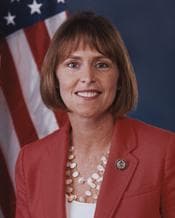
- Introduced
- 7/29/2025
- Last activity
- 7/29/2025 — Referred to the House Committee on Energy and Commerce.
- Sponsored by
- Kathy Castor
- Cosponsors
- - 12 - 0
- Introduced
- In Committee
What this bill would do
The Ethics in Energy Act of 2025 aims to stop utility companies from charging ratepayers for expenses related to political activities. It directs the Federal Energy Regulatory Commission (FERC) to create regulations preventing this and requires utilities to report these expenses. The bill also establishes penalties for utilities that violate these regulations, with a portion of the penalty being returned to the ratepayers.
Yes· 3 of 19
Would households on low incomes be better off under this?+3
This bill is good for low-income households, as lower utility bills represent a larger proportion of their income.
Does this make what the government does easier for the public to see?+3
This bill improves government transparency by requiring utilities to report expenses related to political influence activities.
Would middle-income households be better off under this?+2
This bill is good for middle-class households, as lower utility bills could free up income for other expenses.
The opposite
No question was scored the opposite.
Who it would affect, and how
Potential Positive Impacts for People
-
Lower Utility Bills: This bill prohibits covered utilities from recovering "covered expenses" (political influence activities) from ratepayers, which could lead to lower utility bills. (Section 3)
-
Increased Transparency: The bill requires covered utilities to submit detailed annual reports to the Commission regarding expenses, including payments to third-party vendors and employee compensation related to "covered expenses". This increased transparency could allow ratepayers and the public to better understand how utilities are spending their money. (Section 3(b))
-
Ratepayer Rebates: If a utility is penalized for charging ratepayers for "covered expenses," half of the penalty will be distributed to ratepayers through a rebate. (Section 3(c)(4)(A))
Potential Negative Impacts for People
- There are no explicitly stated negative impacts for people in the provided text.
Groups and Interests Ranking
Every group the model scored this bill for, from -10 to +10. Hover a score for the reason it gave.
- Demographic And Interest Groups
- Good For Low Income Households+3Good For Middle Class Households+2Good For Retirees+2Good For African Americans+1Good For Asian Americans+1Good For Children+1Good For High Income Households+1Good For Hispanic Americans+1Good For Middle Aged+1Good For Native Americans+1Good For Rural Residents+1Good For Seniors+1Good For Urban Residents+1Good For White Americans+1Good For Young Adults+1
- Governance And Ideology
- Improves Government Transparency+3Reduces Lobbying+2Increases Federal Power+1
- Economy And Finance
- Improves Consumer Protection+2
- 3/18/2026
- 1 Cosponsor added.
- 9/10/2025
- 1 Cosponsor added.
- 8/8/2025
- 1 Cosponsor added.
- 8/5/2025
- 1 Cosponsor added.
- 8/1/2025
- 2 Cosponsors added.
- 7/29/2025
- Referred to the House Committee on Energy and Commerce.
- 6 Cosponsors added.
- Introduced in House
 Laura Friedman
Democrat · California
 Jared Huffman
Democrat · California
 Mike Levin
Democrat · California
 Summer Lee
Democrat · Pennsylvania
 Doris Matsui
Democrat · California
 Kevin Mullin
Democrat · California
 Jennifer McClellan
Democrat · Virginia
 Alexandria Ocasio-Cortez
Democrat · New York
 Chellie Pingree
Democrat · Maine
 Rashida Tlaib
Democrat · Michigan
 Shri Thanedar
Democrat · Michigan
 Eugene Vindman
Democrat · Virginia