Bill · H.R. 4759· House(119-HR-4759)
Ban Military Drones Spying on Civilians Act
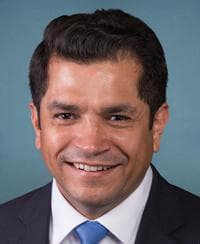
- Introduced
- 7/25/2025
- Last activity
- 7/25/2025 — Referred to the Committee on the Judiciary, and in addition to the Committee on Armed Services, for a period to be subsequently determined by the Speaker, in each case for consideration of such provisions as fall within the jurisdiction of the committee concerned.
- Sponsored by
- Jimmy Gomez
- Cosponsors
- None
- Introduced
- In Committee
What this bill would do
This bill, titled the "Ban Military Drones Spying on Civilians Act," aims to stop the use of specific unmanned aircraft vehicles for surveillance of people in the United States who are participating in protests or civil disobedience. It prohibits the Department of Homeland Security, the Department of Defense, and other executive agencies from using funds for this purpose starting in fiscal year 2026. The Act also requires the President to send annual reports to specific congressional committees regarding the use of covered unmanned aircraft vehicles. These reports must include detailed information about instances where drones were used for novel or unauthorized purposes. This transparency measure includes details on the purpose, duration, and location of use, as well as information regarding any United States persons identified.
Yes
Does this make what the government does easier for the public to see?+7
The bill mandates annual reports to Congress detailing unauthorized or novel uses of covered drones, including details on surveillance of U.S. persons.
Does this protect people from being watched or searched?+7
The bill enhances privacy by prohibiting the surveillance of individuals participating in protests or civil disobedience via high-altitude drones.
The opposite
Does this give the government more power to monitor people inside the country?-5
The bill acts to decrease domestic surveillance capabilities of military-developed unmanned aircraft vehicles.
Does this reduce what the federal government spends?-2
The bill restricts the use of funds for specific drone surveillance activities, which may slightly reduce the budget for those specific operations.
Who it would affect, and how
Potential Positive Impacts for People
-
Prohibition of Surveillance During Civil Unrest: Under Section 2(a), funds cannot be used by the Department of Homeland Security, the Department of Defense, or other executive agencies to operate covered unmanned aircraft vehicles to surveil United States persons engaged in protests or civil disobedience. This prevents the use of specific high-altitude or military-developed aircraft for watching citizens during these activities.
-
Increased Oversight and Transparency: Section 2(b) requires the President to submit an annual report to appropriate congressional committees. This report must detail every instance where a covered unmanned aircraft vehicle was used for a novel or unauthorized purpose, providing specific details such as the purpose of use, the justification, the location, and the time of the event.
-
Protection of Personal Information: Section 2(b)(2)(A)(vii) requires the report to disclose whether any United States persons were surveilled, how many were identified, the purpose for identifying them, whether their information was shared with other agencies or non-Federal entities, and how long that information will be kept.
Potential Negative Impacts for People
- No negative impacts are explicitly stated in the provided text.
Groups and Interests Ranking
Every group the model scored this bill for, from -10 to +10. Hover a score for the reason it gave.
- Governance And Ideology
- Improves Government Transparency+7Improves Privacy Rights+7
- National Security And Foreign Policy
- Increases Domestic Surveillance-5
- Economy And Finance
- Reduces Government Spending-2
- 7/25/2025
- Referred to the Committee on the Judiciary, and in addition to the Committee on Armed Services, for a period to be subsequently determined by the Speaker, in each case for consideration of such provisions as fall within the jurisdiction of the committee concerned.
- Introduced in House