Bill · H.R. 4693· House(119-HR-4693)
College Athlete Right to Organize Act
- Introduced
- 7/23/2025
- Last activity
- 7/23/2025 — Referred to the House Committee on Education and Workforce.
- Sponsored by
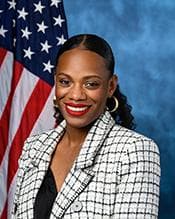
- Summer Lee
- Cosponsors
- - 11 - 0
- Introduced
- In Committee
What this bill would do
The ``College Athlete Right to Organize Act'' seeks to establish collective bargaining rights for college athletes. It amends the National Labor Relations Act to classify certain student-athletes as employees of their respective institutions. This classification applies to individuals receiving direct compensation, such as grant-in-aid, that requires sports participation. The bill allows for the formation of multiemployer bargaining units within athletic conferences. It also extends employer definitions to include public institutions of higher education. Finally, the Act includes provisions regarding tax treatments and the severability of its legal components.
Yes· 3 of 6
Does this strengthen the rights of workers to organise?+8
The bill establishes collective bargaining rights and allows for the formation of multiemployer bargaining units for college athletes.
Would students be better off under this?+7
The bill grants student-athletes the legal status of employees, allowing them to organize and bargain for their rights.
Would people in their twenties and thirties be better off under this?+6
The bill provides labor rights and bargaining power specifically to college-aged student-athletes.
The opposite
No question was scored the opposite.
Who it would affect, and how
Potential Positive Impacts for People
-
Establishment of Collective Bargaining Rights: By classifying student-athletes as employees, the bill allows them to negotiate terms and conditions of their employment through representation of their choosing (Section 2 and Section s 3).
-
Creation of Multiemployer Bargaining Units: Athletes can form bargaining units that span multiple institutions within an intercollegiate athletic conference, provided there is consent from employee representatives (Section 3(b)).
-
Protection Against Waivers: The bill prevents individuals from entering into agreements or legal settlements that would waive their rights or permit noncompliance with the Act (Section 3(d)).
-
Tax and Financial Aid Protections: The Act ensures that any new forms of direct compensation do not change how income is treated for taxes, nor do they affect the treatment of qualified scholarships or eligibility for federal financial assistance (Section 4).
Potential Negative Impacts for People
- No Specific Negative Impacts Identified: The provided text does not explicitly list specific negative consequences or burdens for individuals or groups; it focuses on the establishment of rights and legal protections for the athletes.
Groups and Interests Ranking
Every group the model scored this bill for, from -10 to +10. Hover a score for the reason it gave.
- Demographic And Interest Groups
- Good For Students+7Good For Young Adults+6Good For Low Income Households+4
- Economy And Finance
- Improves Union Protections+8
- Social Issues And Justice
- Improves Poverty Reduction+3
- Education And Technology
- Improves College Affordability+2
- 7/23/2025
- Referred to the House Committee on Education and Workforce.
- 11 Cosponsors added.
- Introduced in House
One bill Congress.gov lists as related to this one — companions in the other chamber, earlier versions, and bills this one absorbed or was folded into.
 Yassamin Ansari
Democrat · Arizona
 Emanuel Cleaver
Democrat · Missouri
 Greg Casar
Democrat · Texas
 Henry Johnson
Democrat · Georgia
 James McGovern
Democrat · Massachusetts
 Alexandria Ocasio-Cortez
Democrat · New York
 Ilhan Omar
Democrat · Minnesota
 Delia Ramirez
Democrat · Illinois
 Rashida Tlaib
Democrat · Michigan
 Jill Tokuda
Democrat · Hawaii
 Shri Thanedar
Democrat · Michigan