Bill · H.R. 4661· House(119-HR-4661)
AMERICA DRIVES Act
- Introduced
- 7/23/2025
- Last activity
- 7/24/2025 — Referred to the Subcommittee on Highways and Transit.
- Sponsored by
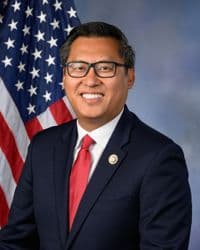
- Vince Fong
- Cosponsors
- - 1 - 0
- Introduced
- In Committee
What this bill would do
The AMERICA DRIVES Act seeks to amend title 49 of the United States Code regarding automated driving systems. It clarifies that commercial motor vehicles equipped with Level 4 or Level 5 automated driving systems can operate in interstate commerce without a human driver or remote human driver on board. The bill directs the Secretary of Transportation to issue necessary regulations and address specific regulatory sections to integrate these systems into commercial operations. It also aims to streamline regulations such as hours of service, drug testing, and commercial driver's license requirements for these vehicles. Additionally, the bill ensures regulatory parity and flexibility for safety technologies.
Yes
Would business owners be better off under this?+5
The bill provides operational efficiencies and regulatory clarity for motor carriers and logistics businesses.
Is this likely to create jobs?+3
By allowing driverless commercial operation, the bill facilitates the integration of automated systems into the logistics industry.
Does this make it easier to run a small business?+2
The bill reduces regulatory burdens and ensures parity for motor carriers using automated driving systems.
The opposite
Would union members be better off under this?-6
The bill facilitates the transition to driverless commercial vehicles, which may impact the demand for human drivers.
Does this leave more decisions to the states?-4
The bill uses federal preemption to prevent states from requiring human occupants in automated commercial vehicles.
Who it would affect, and how
Potential Positive Impacts for People
-
Commercial Vehicle Operation Efficiency: A commercial motor vehicle equipped with a Level 4 or Level 5 ADS may be operated in interstate commerce without a human driver on board or a remote human driver (Section 2(a)(1)).
-
Streamlined Regulations: The Secretary of Transportation is directed to update regulations that currently apply only to human drivers—such as hours of service, drug testing, electronic logging devices, commercial driver's licenses, and physical qualification requirements—to clarify they do not apply to an ADS or an ADS-equipped vehicle operating without a human driver (Section 3(a)(1)).
-
Regulatory Parity: The Secretary is prohibited from issuing regulations that unduly burden motor carriers operating ADS-equipped vehicles or discriminate against them compared to other commercial motor vehicles (Section 3(b)).
-
Safety Technology Flexibility: The law includes an exclusion so that the width calculated for certain regulations does not include automated driving system technologies or equipment (Section 3(c)).
-
Permissible Warning Devices: Regulations will be applied to include cab-mounted warning beacons as a permissible warning device (Section 4).
Potential Negative Impacts for People
- No specific negative impacts are explicitly detailed within the provided text.
Groups and Interests Ranking
Every group the model scored this bill for, from -10 to +10. Hover a score for the reason it gave.
- Economy And Finance
- Increases Job Creation+3Improves Small Business Support+2
- Governance And Ideology
- Increase States Rights-4
- Demographic And Interest Groups
- Good For Business Owners+5Good For Union Workers-6
- 12/15/2025
- 1 Cosponsor added.
- 9/16/2025
- 1 Cosponsor added.
- 7/24/2025
- Referred to the Subcommittee on Highways and Transit.
- 7/23/2025
- Referred to the House Committee on Transportation and Infrastructure.
- Introduced in House
 Kevin Kiley
Independent · California
 Jay Obernolte
Republican · California