Bill · H.R. 4632· House(119-HR-4632)
Fair Representation Act
- Introduced
- 7/23/2025
- Last activity
- 7/23/2025 — Referred to the Committee on the Judiciary, and in addition to the Committee on House Administration, for a period to be subsequently determined by the Speaker, in each case for consideration of such provisions as fall within the jurisdiction of the committee concerned.
- Sponsored by
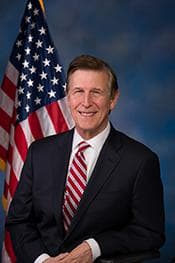
- Donald Beyer
- Cosponsors
- - 7 - 0
- Introduced
- In Committee
What this bill would do
The Fair Representation Act establishes ranked choice voting for all elections for Senators and Representatives in Congress. It requires States with multiple Representatives to use multi-member congressional districts instead of single-member districts. The bill also mandates that States conduct congressional redistricting according to specific nonpartisan criteria. To support these changes, the Act provides payments to States to assist with implementation and election setup. Additionally, it creates a process for federal courts to develop redistricting plans if a State fails to meet established deadlines.
Yes· 3 of 9
Does this make what the government does easier for the public to see?+8
The bill mandates a public website for redistricting data, proposed maps, and public comment integration.
Does this protect the right to vote?+7
The act establishes ranked choice voting and mandates nonpartisan, transparent redistricting processes.
Does this make casting a ballot easier in practice?+6
The bill enhances voter participation through ranked choice voting and requires public notice in multiple languages.
The opposite
No question was scored the opposite.
Who it would affect, and how
Potential Positive Impacts for People
-
Ranked Choice Voting: This system allows voters to rank candidates by preference, which can change how ballots are tabulated for both single-seat and multi-seat elections (Section 101).
-
Federal Support for Implementation: The Commission will provide payments to States, calculated by a per capita amount between $4 and $8 based on registered voters, to help cover costs like voting equipment updates, training, and voter education (Section 331).
-
Nonpartisan Redistricting: States are required to follow specific criteria for drawing districts, including requirements to substantially equalize population and comply with the Voting Rights Act of 1965 (Section 303).
-
Protection Against Partisan Advantage: The bill prohibits using redistricting plans that materially favor or disfavor any political party when considered on a statewide basis (Section 303).
-
Increased Transparency in Redistricting: The Act requires the entity developing a plan to maintain a public website featuring proposed maps, demographic data, and a method for public comment (Section 304).
-
Public Participation in Redistricting: States must hold public hearings in different regions and must make notices available in languages required under the Voting Rights Act of 1965 (Section 304).
Potential Negative Impacts for People
-
Mandatory Multi-Member Districts: States with six or more Representatives must establish districts that elect between three and five Representatives, rather than single-member districts (Section 201).
-
Mandatory At-Large Elections: States entitled to five or fewer Representatives must elect all such Representatives at large (Section 202).
-
Potential Diminishment of Voting Rights: An exception exists where the use of multi-member or at-large districts might be found by a court to diminish the ability of citizens to elect their preferred candidates based on race or color (Section 206).
-
Court-Developed Redistricting Plans: If a State fails to enact a plan by a specific deadline, a federal court may take over the authority to develop and publish a redistricting plan for that State (Section 305).
Groups and Interests Ranking
Every group the model scored this bill for, from -10 to +10. Hover a score for the reason it gave.
- Social Issues And Justice
- Improves Voting Rights+7Improves Voting Access+6Improves Racial Equity+5
- Demographic And Interest Groups
- Good For African Americans+5Good For Hispanic Americans+5Good For Low Income Households+3Good For Urban Residents+2
- Governance And Ideology
- Improves Government Transparency+8Improves Due Process+4
- 6/18/2026
- 1 Cosponsor added.
- 8/29/2025
- 2 Cosponsors added.
- 7/23/2025
- Referred to the Committee on the Judiciary, and in addition to the Committee on House Administration, for a period to be subsequently determined by the Speaker, in each case for consideration of such provisions as fall within the jurisdiction of the committee concerned.
- 4 Cosponsors added.
- Introduced in House
 Ro Khanna
Democrat · California
 James McGovern
Democrat · Massachusetts
 Jerrold Nadler
Democrat · New York
 Joe Neguse
Democrat · Colorado
 Scott Peters
Democrat · California
 Jamie Raskin
Democrat · Maryland
 Rashida Tlaib
Democrat · Michigan