Bill · H.R. 4628· House(119-HR-4628)
AI Impersonation Prevention Act of 2025
- Introduced
- 7/23/2025
- Last activity
- 7/23/2025 — Referred to the House Committee on the Judiciary.
- Sponsored by
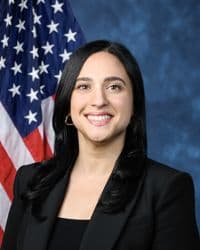
- Yassamin Ansari
- Cosponsors
- - 5 - 1
- Introduced
- In Committee
What this bill would do
This bill, titled the "AI Impersonation Prevention Act of 2025," aims to amend title 18 of the United States Code. It seeks to prohibit the use of artificial intelligence to impersonate federal officials. Specifically, it targets the knowing use of AI to mimic the voice or likeness of a United States officer or employee to produce false or misleading content. Violators could face fines or up to three years in prison. The act includes protections for satire, parody, or protected expressive conduct if clear disclosures are provided.
Yes
Does this make what the government does easier for the public to see?+4
The bill seeks to prevent the production of materially false or misleading content regarding federal officers.
Does this protect people from being watched or searched?+3
The bill protects the likeness and voice of federal employees from unauthorized AI mimicry.
Does this put more rules on large technology companies?+3
The bill regulates the use of generative AI models used for impersonating federal officials.
The opposite
Does this protect the individual right to speak freely?-2
The bill creates potential legal burdens for expressive conduct like satire through required disclosures.
Does this protect what people are allowed to say in public life?-2
The bill imposes disclosure requirements on satire and expressive conduct to avoid criminal penalties.
Who it would affect, and how
Potential Positive Impacts for People
-
Prevention of Deception: The bill prohibits people from knowingly using artificial intelligence to impersonate or pretend to be a federal officer or employee, which includes mimicking their voice or likeness (Section 2). This could prevent the spread of materially false or misleading content.
-
Accountability for AI Misuse: By establishing penalties such as fines or up to three years in prison, the act creates a consequence for those who use AI systems to falsely represent themselves as identifiable individuals in a way that makes others believe the content is authentic (Section 2).
-
Protection of Creative Expression: The bill ensures that legitimate uses of artificial intelligence in satire, parody, or other First Amendment protected expressive conduct are not prohibited, as long as they include a clear disclosure that the content is not authentic (Section 2).
Potential Negative Impacts for People
-
Criminal Penalties for Misuse: Individuals who use artificial intelligence to mimic the voice or likeness of a federal official without an explicit disclaimer could face fines or imprisonment for up to three years (Section 2).
-
Burden of Disclosure: For those engaging in satire, parody, or expressive conduct, the bill requires the inclusion of a clear disclosure that the content is not authentic to avoid violating the new prohibition (Section 2).
Groups and Interests Ranking
Every group the model scored this bill for, from -10 to +10. Hover a score for the reason it gave.
- Governance And Ideology
- Improves Government Transparency+4Improves Privacy Rights+3Improves Freedom Of Speech-2
- Education And Technology
- Increases Big Tech Regulation+3
- Social Issues And Justice
- Improves Freedom Of Speech-2
- 9/3/2025
- 1 Cosponsor added.
- 7/23/2025
- Referred to the House Committee on the Judiciary.
- 5 Cosponsors added.
- Introduced in House
 Suzanne Bonamici
Democrat · Oregon
 Yvette Clarke
Democrat · New York
 Christopher Deluzio
Democrat · Pennsylvania
 Steven Horsford
Democrat · Nevada
 Abraham Hamadeh
Republican · Arizona
 Kelly Morrison
Democrat · Minnesota