Bill · H.R. 4603· House(119-HR-4603)
FAIR Act
- Introduced
- 7/22/2025
- Last activity
- 7/22/2025 — Referred to the House Committee on Energy and Commerce.
- Sponsored by
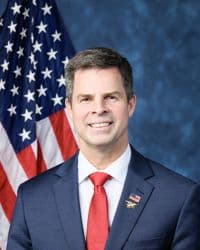
- John McGuire
- Cosponsors
- None
- Introduced
- In Committee
What this bill would do
This bill, known as the "FAIR Act," seeks to amend the Public Utility Regulatory Policies Act of 1978. It would prevent State regulatory authorities from approving electricity rates for utilities that engage in specific diversity, equity, or inclusion (DEI) practices. Additionally, it prohibits the approval of rates if the utility considers environmental, social, or governance (ESG) factors in rate establishment or operational decisions. The bill includes specific definitions for what constitutes DEI and ESG factors. It also provides certain exceptions for compliance with Federal or State laws.
Yes
No question was scored yes.
The opposite· 3 of 10
Does this cut the pollution that drives climate change?-6
The bill prohibits utilities from considering carbon emissions reductions or climate change policies in rate establishment unless tied to direct costs.
Would Black Americans be better off under this?-5
The bill limits supplier diversity programs and workforce quotas that utilize race as a factor.
Would Hispanic Americans be better off under this?-5
The bill limits supplier diversity programs and workforce quotas that utilize ethnicity as a factor.
Who it would affect, and how
Potential Positive Impacts for People
-
Prevention of certain employment requirements: The bill would prohibit electric utilities from requiring employees to undergo training or sign statements that assert any race, color, ethnicity, religion, biological sex, or national origin is inherently superior or inferior, oppressive or oppressed, or privileged or unprivileged (Section 2, Paragraph 22, B).
-
Limitation of specific corporate policies: The bill restricts utilities from using social considerations like corporate board or workforce composition quotas based on race, color, ethnicity, sex, or national origin (Section 2, Paragraph 23, C, ii).
-
Restriction on certain supplier diversity programs: The bill limits supplier diversity programs that grant preferences based on race, color, ethnicity, sex, or national origin, unless they are required by law (Section 2, Paragraph 23, C, ii).
-
Focus on economic factors: The bill states that environmental considerations can still be considered if they are directly tied to pecuniary impacts such as cost reduction, reliability enhancement, or compliance with law (Section 2, Paragraph 23, C, i).
Potential Negative Impacts for People
-
Restrictions on environmental and social initiatives: The bill would prohibit utilities from considering environmental justice initiatives or climate change policies when establishing rates or making operational decisions, unless they are tied to specific cost or reliability reasons (Section 2, Paragraph 23, C, i).
-
Limitations on corporate governance: The bill prevents the adoption of corporate governance policies if they are primarily for advancing political, ideological, or social objectives unrelated to utility operations or ratepayer costs (Section 2, Paragraph 23, C, iii).
-
Prohibition of certain DEI practices: State regulatory authorities would be unable to approve rates for utilities that engage in practices such as discriminating for or against any person on the basis of race, color, ethnicity, religion, biological sex, or national origin (Section 2, Paragraph 22, A).
Groups and Interests Ranking
Every group the model scored this bill for, from -10 to +10. Hover a score for the reason it gave.
- Demographic And Interest Groups
- Good For African Americans-5Good For Hispanic Americans-5Good For Women-4Good For Low Income Households-3
- Environment Energy And Infrastructure
- Reduces Carbon Emissions-6Improves Environmental Protections-5
- Social Issues And Justice
- Improves Racial Equity-5Improves Gender Equality-4Improves Poverty Reduction-2
- Governance And Ideology
- Increase States Rights-3
- 7/22/2025
- Referred to the House Committee on Energy and Commerce.
- Introduced in House