Bill · H.R. 4563· House(119-HR-4563)
Fixing Gaps in Hurricane Preparedness Act
- Introduced
- 7/21/2025
- Last activity
- 7/21/2025 — Referred to the House Committee on Science, Space, and Technology.
- Sponsored by
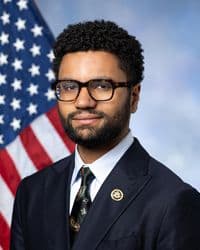
- Maxwell Frost
- Cosponsors
- - 0 - 2
- Introduced
- In Committee
What this bill would do
This bill, called the "Fixing Gaps in Hurricane Preparedness Act," directs the National Oceanic and Atmospheric Administration (NOAA) to research how the public understands and responds to hurricane forecasts and warnings. It aims to improve these forecasts and warnings based on public understanding. NOAA will work with the National Science Foundation on this.
Yes· 3 of 15
Does this put more money into scientific research?+6
Increases funding and direction for scientific research related to weather forecasting and public response.
Does this improve help for people hit by a disaster?+6
The legislation improves hurricane preparedness and forecasting through targeted research and pilot studies.
Does this put more money into medical research?+5
The bill directs NOAA to carry out social, behavioral, and economic research to improve hurricane forecasts and warnings.
The opposite
No question was scored the opposite.
Who it would affect, and how
Potential Positive Impacts for People
-
Improved Hurricane Forecasts and Warnings (Sec. 2(b)): The research and development activities outlined in this section aim to improve how the public understands and responds to hurricane forecasts and warnings. This could lead to more effective communication and preparedness, potentially saving lives and reducing property damage.
-
Focus on Vulnerable Populations (Sec. 2(b)(1)(F), Sec. 2(b)(3), Sec. 2(b)(9)): The bill specifically requires NOAA to consider how understanding and response to hurricane forecasts and warnings vary across demographic groups, including the elderly, people with disabilities, and other vulnerable populations, and to conduct risk assessments in communities with significant elderly populations. This could lead to tailored warnings and preparedness strategies that better serve these groups.
-
Economic Value Assessment (Sec. 2(b)(4)): Evaluating the economic value of extending lead times for tropical cyclone warnings could help justify investments in improved forecasting and warning systems, ultimately benefiting the public through better preparedness and reduced economic losses.
-
Pilot Study to Assess Preparedness (Sec. 2(c)): The pilot study using surveys, focus groups, and interviews will gather information from hurricane-prone areas about their preparedness levels. This data can inform strategies to improve preparedness and address specific needs within those communities.
Potential Negative Impacts for People
- I am unable to identify any potential negative impacts based solely on the text provided.
Groups and Interests Ranking
Every group the model scored this bill for, from -10 to +10. Hover a score for the reason it gave.
- Demographic And Interest Groups
- Good For People With Disabilities+4Good For Retirees+4Good For Seniors+4Good For Children+2Good For Hispanic Americans+2Good For Immigrants+2Good For Low Income Households+2Good For Rural Residents+2Good For Urban Residents+2
- Education And Technology
- Increases Scientific Research Funding+6
- Environment Energy And Infrastructure
- Improves Disaster Relief And F E M A+6
- Governance And Ideology
- Improves Government Transparency+3Increases Federal Power+2
- Healthcare
- Increases Research Funding+5
- Social Issues And Justice
- Improves Disability Rights+3
- 10/1/2026
- 1 Cosponsor added.
- 7/21/2025
- Referred to the House Committee on Science, Space, and Technology.
- 1 Cosponsor added.
- Introduced in House
 Vern Buchanan
Republican · Florida
 Daniel Webster
Republican · Florida