Bill · H.R. 4560· House(119-HR-4560)
Building Resilient Infrastructure and Communities for All Act of 2025
- Introduced
- 7/21/2025
- Last activity
- 7/22/2025 — Referred to the Subcommittee on Economic Development, Public Buildings, and Emergency Management.
- Sponsored by
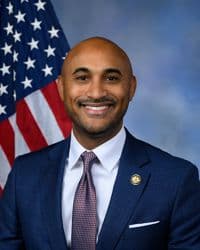
- Shomari Figures
- Cosponsors
- - 0 - 2
- Introduced
- In Committee
What this bill would do
This bill, called the "Building Resilient Infrastructure and Communities for All Act of 2025," amends the Robert T. Stafford Disaster Relief and Emergency Assistance Act. It changes how funds are allocated for predisaster hazard mitigation, shifting from a competitive basis to direct allocations to states based on a formula. The bill also sets a minimum amount of financial assistance for Indian tribal governments.
Yes· 3 of 27
Would Native Americans be better off under this?+7
The bill's guarantee of minimum financial assistance for Indian tribal governments could significantly improve disaster preparedness and resilience in Native American communities.
Does this improve help for people hit by a disaster?+7
The bill aims to improve disaster preparedness and relief by changing funding mechanisms and ensuring funds reach states and tribal governments for hazard mitigation projects.
Would households on low incomes be better off under this?+5
Low-income households often suffer disproportionately during disasters, so the bill's focus on predisaster mitigation could help reduce their vulnerability.
The opposite
Does this leave more decisions to the states?-2
While the bill allocates funds to states, it also sets conditions and formulas for distribution, potentially limiting state autonomy in deciding how to use the funds.
Who it would affect, and how
Potential Positive Impacts for People
-
More Funds to States Based on Need (Sec. 2(a)(3)(B)): The bill distributes funds to states based on population size and vulnerability to natural hazards, this could lead to more funding for states that need it most, helping them prepare for disasters.
-
Minimum Funding for Tribes (Sec. 2(a)(3)(D)): The bill ensures that Indian tribal governments receive no less than $75,000,000 in financial assistance. This could provide crucial resources for tribes to improve their resilience to disasters.
-
Suballocation to Local Governments (Sec. 2(a)(3)(E)): States are required to distribute at least 50% of the funds they receive to local governments for projects. This could mean more direct investment in local projects that reduce the impact of disasters.
Potential Negative Impacts for People
-
Loss of Local Government Input (Sec. 2(a)(1)): The bill removes "or local government" from subsection (c) in each place it appears, possibly reducing the ability of local governments to directly influence predisaster hazard mitigation.
-
States May Not Receive Funds (Sec. 2(a)(2)(C)): States may not receive funds if they do not follow new procedures in the bill. This could mean less funds available.
Groups and Interests Ranking
Every group the model scored this bill for, from -10 to +10. Hover a score for the reason it gave.
- Demographic And Interest Groups
- Good For Native Americans+7Good For Low Income Households+5Good For Middle Class Households+5Good For People With Disabilities+4Good For Rural Residents+4Good For African Americans+3Good For Asian Americans+3Good For Business Owners+3Good For Children+3Good For Farmers+3Good For Hispanic Americans+3Good For Immigrants+3Good For Men+3Good For Middle Aged+3Good For Retirees+3Good For Seniors+3Good For Students+3Good For Urban Residents+3Good For White Americans+3Good For Women+3Good For Young Adults+3Good For Billionaires+1Good For High Income Households+1Good For High Net Worth Individuals+1Good For Ultra High Net Worth Individuals+1
- Environment Energy And Infrastructure
- Improves Disaster Relief And F E M A+7
- Governance And Ideology
- Increases Federal Power+3Increase States Rights-2
- 8/29/2025
- 1 Cosponsor added.
- 7/22/2025
- Referred to the Subcommittee on Economic Development, Public Buildings, and Emergency Management.
- 7/21/2025
- Referred to the House Committee on Transportation and Infrastructure.
- 1 Cosponsor added.
- Introduced in House
 Chuck Edwards
Republican · North Carolina
 Brian Fitzpatrick
Republican · Pennsylvania