Bill · H.R. 4392· House(119-HR-4392)
Uterine Fibroid Intervention and Gynecological Health Treatment Act of 2025
- Introduced
- 7/15/2025
- Last activity
- 7/15/2025 — Referred to the House Committee on Energy and Commerce.
- Sponsored by
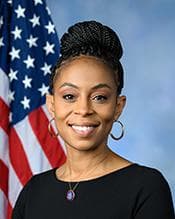
- Shontel Brown
- Cosponsors
- - 54 - 0
- Introduced
- In Committee
What this bill would do
This bill, titled the "Uterine Fibroid Intervention and Gynecological Health Treatment Act of 2025," authorizes the Secretary of Health and Human Services to award grants to increase early detection of and intervention for uterine fibroids. The Secretary is tasked with conducting or supporting research to create evidence-based strategies for early detection in healthcare settings. Grants may also be awarded to States to implement programs and public awareness campaigns. These State programs can fund activities such as screening procedures, patient navigation, and improving access to healthcare. Additionally, the Secretary may award grants for specific research, including studies on pain management disparities and other intrauterine conditions. Finally, the Act requires regular reports to be submitted to Congress regarding grant results and research developments.
Yes· 3 of 8
Would women be better off under this?+8
The bill directly addresses gynecological health issues that specifically affect women.
Does this put more money into medical research?+6
The act authorizes research into uterine fibroids, pain management disparities, and related intrauterine conditions.
Does this make health care easier to get in general?+5
The bill enhances healthcare access through grants for screening, patient navigation, and increased awareness of uterine fibroids.
The opposite
No question was scored the opposite.
Who it would affect, and how
Potential Positive Impacts for People
-
Increased detection and intervention: The Secretary will conduct or support research to increase early detection of and intervention for uterine fibroids (Section 2(a)(1)).
-
Evidence-based strategies: The bill requires the creation of evidence-based or evidence-informed strategies to help increase early detection in healthcare settings (Section 2(a)(2)).
-
Public awareness: States can use grants to develop and implement public awareness and education campaigns regarding uterine fibroids (Section 3(a)(2)).
-
Improved screening and access: Grant funds can be used for screening procedures, including advanced gynecological imaging, patient navigation services, and facilitating access to healthcare settings (Section 3(b)).
-
Support for vulnerable populations: The Secretary will give priority to States proposing programs in geographic areas with socially vulnerable populations that have an elevated risk of uterine fibroid development (Section 3(c)).
-
Targeted research: Grants may be used for research into disparities in pain control and management during surgical treatment, as well as other intrauterine conditions like Asherman's Syndrome (Section 4).
Potential Negative Impacts for People
- No negative impacts are explicitly mentioned in the provided text.
Groups and Interests Ranking
Every group the model scored this bill for, from -10 to +10. Hover a score for the reason it gave.
- Demographic And Interest Groups
- Good For Women+8Good For Low Income Households+4
- Healthcare
- Increases Research Funding+6Improves Healthcare Access+5
- Social Issues And Justice
- Improves Gender Equality+5Improves Racial Equity+4
- Education And Technology
- Increases Scientific Research Funding+5
- Governance And Ideology
- Improves Government Transparency+3
- 6/24/2026
- 1 Cosponsor added.
- 5/20/2026
- 1 Cosponsor added.
- 4/23/2026
- 1 Cosponsor added.
- 4/20/2026
- 3 Cosponsors added.
- 4/14/2026
- 3 Cosponsors added.
- 3/27/2026
- 1 Cosponsor added.
- 3/25/2026
- 1 Cosponsor added.
- 11/19/2025
- 1 Cosponsor added.
- 9/18/2025
- 1 Cosponsor added.
- 9/17/2025
- 1 Cosponsor added.
- 9/2/2025
- 1 Cosponsor added.
- 7/17/2025
- 3 Cosponsors added.
- 7/15/2025
- Referred to the House Committee on Energy and Commerce.
- 36 Cosponsors added.
- Introduced in House
 Alma Adams
Democrat · North Carolina
 Yassamin Ansari
Democrat · Arizona
 Yvette Clarke
Democrat · New York
 Angie Craig
Democrat · Minnesota
 Troy Carter
Democrat · Louisiana
 Debbie Dingell
Democrat · Michigan
 Cleo Fields
Democrat · Louisiana
 Lizzie Fletcher
Democrat · Texas
 Valerie Foushee
Democrat · North Carolina
 Shomari Figures
Democrat · Alabama
 Al Green
Democrat · Texas
 Jahana Hayes
Democrat · Connecticut
 Henry Johnson
Democrat · Georgia
 Pramila Jayapal
Democrat · Washington
 Robin Kelly
Democrat · Illinois
 Ro Khanna
Democrat · California
 Raja Krishnamoorthi
Democrat · Illinois
 Sydney Kamlager-Dove
Democrat · California
 Summer Lee
Democrat · Pennsylvania
 George Latimer
Democrat · New York
 Kweisi Mfume
Democrat · Maryland
 Grace Meng
Democrat · New York
 Lucy McBath
Democrat · Georgia
 Seth Magaziner
Democrat · Rhode Island
 Robert Menendez
Democrat · New Jersey
 Jennifer McClellan
Democrat · Virginia
 LaMonica McIver
Democrat · New Jersey
 John Mannion
Democrat · New York
 April McClain Delaney
Democrat · Maryland
 Sarah McBride
Democrat · Delaware
 Ayanna Pressley
Democrat · Massachusetts
 Luz Rivas
Democrat · California
 David Scott
Democrat · Georgia
 Terri Sewell
Democrat · Alabama
 Greg Stanton
Democrat · Arizona
 Haley Stevens
Democrat · Michigan
 Emilia Sykes
Democrat · Ohio
 Andrea Salinas
Democrat · Oregon
 Suhas Subramanyam
Democrat · Virginia
 Lateefah Simon
Democrat · California
 Bennie Thompson
Democrat · Mississippi
 Dina Titus
Democrat · Nevada
 Rashida Tlaib
Democrat · Michigan
 Lori Trahan
Democrat · Massachusetts
 Ritchie Torres
Democrat · New York
 Jill Tokuda
Democrat · Hawaii
 Shri Thanedar
Democrat · Michigan
 Lauren Underwood
Democrat · Illinois
 Nydia Velázquez
Democrat · New York
 Maxine Waters
Democrat · California
 Debbie Wasserman Schultz
Democrat · Florida
 Frederica Wilson
Democrat · Florida
 Bonnie Watson Coleman
Democrat · New Jersey
 James Walkinshaw
Democrat · Virginia