Bill · H.R. 4366· House(119-HR-4366)
Save Local Business Act
- Introduced
- 7/14/2025
- Last activity
- 1/13/2026 — Rule H. Res. 988 passed House.
- Sponsored by
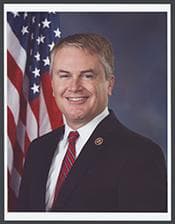
- James Comer
- Cosponsors
- - 2 - 0
- Introduced
What this bill would do
This bill is known as the Save Local Business Act. It looks at how two or more employers are treated as joint employers under the National Labor Relations Act and the Fair Labor Standards Act of 1938. The text changes the rules for when an employer can be considered a joint employer of another employer's workers. Specifically, it requires each employer to directly, actually, and immediately exercise significant control over essential employment terms. These essential terms include hiring, firing, pay, benefits, day-to-day supervision, work schedules, tasks, and discipline. The bill sets the same joint-employer standard for both the National Labor Relations Act and the Fair Labor Standards Act of 1938.
Yes
Would business owners be better off under this?+6
Business owners benefit from more predictable and restrictive standards regarding their liability as joint employers.
Does this make it easier to run a small business?+5
The bill provides greater legal certainty and reduces the risk of indirect liability for businesses regarding the employees of their contractors or partners.
The opposite· 3 of 4
Would union members be better off under this?-5
The bill limits the ability of unions to hold larger corporations liable for labor violations through their subcontractors or franchisees.
Does this strengthen the rights of workers to organise?-4
By raising the threshold for joint-employer status, the bill makes it more difficult for unions to organize or hold parent companies accountable for labor practices.
Would households on low incomes be better off under this?-3
The narrowing of joint-employer standards may reduce legal recourse for workers regarding wages and benefits held by larger entities.
Who it would affect, and how
Potential Positive Impacts for People
-
Section 2(a): This provision adds a clear rule under the National Labor Relations Act stating that an employer is only a joint employer if they directly, actually, and immediately exercise significant control over essential terms and conditions of employment, such as hiring, firing, pay, and benefits. This might be considered positive because it provides a strict and specific standard for when joint employment applies.
-
Section 2(b): This provision applies the exact same joint-employer standard to the Fair Labor Standards Act of 1938. This might be considered positive because it keeps the rules consistent across both labor laws.
Potential Negative Impacts for People
-
Section 2(a): By setting a strict rule that an employer must directly, actually, and immediately exercise significant control over essential terms like hiring, firing, and pay to be a joint employer, some individuals might find it harder to hold multiple companies accountable as joint employers. This might be considered a burden if workers need to seek relief or bargaining rights from a larger parent company or franchiser that indirects control.
-
Section 2(b): Applying this same restrictive joint-employer test to the Fair Labor Standards Act of 1938 could make it more difficult for workers to claim wage and hour protections against multiple business entities if those entities do not meet the direct and immediate control standard.
Groups and Interests Ranking
Every group the model scored this bill for, from -10 to +10. Hover a score for the reason it gave.
- Demographic And Interest Groups
- Good For Business Owners+6Good For Union Workers-5Good For Low Income Households-3
- Governance And Ideology
- Increases Federal Power-2
- Economy And Finance
- Improves Small Business Support+5Improves Union Protections-4
- 1/13/2026
- Rule H. Res. 988 passed House.
- 1/12/2026
- Rules Committee Resolution H. Res. 988 Reported to House. Rule provides for consideration of H.R. 2988, H.R. 2262, H.R. 2270, H.R. 2312 and H.R. 4366. The resolution provides for consideration of H.R. 2988 under a structured rule, and H.R. 2262, H.R. 2270, H.R. 2312, and H.R. 4366 under a closed rule. The rule provides for one hour of general debate and one motion to recommit on each bill.
- 12/30/2025
- Reported (Amended) by the Committee on Education and Workforce. H. Rept. 119-422.
- Placed on the Union Calendar, Calendar No. 368.
- 11/17/2025
- 1 Cosponsor added.
- 9/2/2025
- 1 Cosponsor added.
- 7/23/2025
- Committee Consideration and Mark-up Session Held
- Ordered to be Reported in the Nature of a Substitute by the Yeas and Nays: 20 - 16.
- 7/14/2025
- Referred to the House Committee on Education and Workforce.
- Introduced in House
One bill Congress.gov lists as related to this one — companions in the other chamber, earlier versions, and bills this one absorbed or was folded into.
 Kevin Hern
Republican · Oklahoma
 Robert Onder
Republican · Missouri