Bill · H.R. 4361· House(119-HR-4361)
STOP China Act
- Introduced
- 7/14/2025
- Last activity
- 7/15/2025 — Referred to the Subcommittee on Highways and Transit.
- Sponsored by
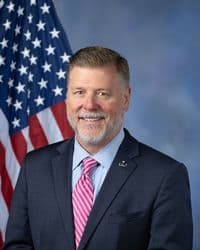
- Eric Crawford
- Cosponsors
- - 2 - 1
- Introduced
- In Committee
What this bill would do
The STOP China Act aims to address national security risks by prohibiting the use of Federal funds for certain vehicles and technologies. It specifically targets the procurement of vehicles produced or provided by entities based in certain countries, such as the People's Republic of China. The bill prohibits the Secretary and the Department of Transportation from using covered funding for the procurement of these vehicles or for infrastructure meant to fuel or charge them. This includes restrictions on rolling stock and electric power trains. To enforce this, a list of covered entities will be maintained and updated by the United States Trade Representative.
Yes
Does this better protect the country from computer attacks?+3
The bill addresses national security risks associated with the adoption of certain foreign-developed vehicle technologies.
Would business owners be better off under this?+2
The bill seeks to protect the long-term competitiveness of United States domestic supply chains.
Does this make it easier to run a small business?+1
The bill aims to protect domestic supply chains from below-market pricing by foreign entities.
The opposite
Does this improve buses, trains and other public transport?-3
The bill prohibits federal funding for the procurement of certain rolling stock and the infrastructure needed to charge them.
Who it would affect, and how
Potential Positive Impacts for People
-
National Security Protection: The bill seeks to address risks posed by the adoption of certain technologies in the United States, which are described as a significant risk to national security (Section 2).
-
Economic Competitiveness: By confronting the industrial policies of the People's Republic of China, the bill aims to protect the long-term competitiveness of the United States (Section 2).
-
Protection of Domestic Supply Chains: The legislation is intended to prevent the undermining of United States domestic supply chains caused by products sold at below-market prices (Section 2).
-
Responsible Use of Taxpayer Funds: The bill ensures that United States taxpayer dollars are not used to fund vehicle manufacturing or technology companies that are subsidized by the People's Republic of China (Section 2).
Potential Negative Impacts for People
-
Restrictions on Infrastructure: The bill prohibits the use of federal funds for the construction, installation, or maintenance of infrastructure used to fuel or charge certain vehicles, specifically buses (Section 3 and Section 4).
-
Procurement Limitations: Agencies and persons may be unable to use certain federal funds for the procurement of specific vehicles or electric power trains (Section 3 and Section 4).
Groups and Interests Ranking
Every group the model scored this bill for, from -10 to +10. Hover a score for the reason it gave.
- Environment Energy And Infrastructure
- Improves Public Transit-3
- National Security And Foreign Policy
- Improves Cybersecurity Defense+3
- Demographic And Interest Groups
- Good For Business Owners+2
- Economy And Finance
- Improves Small Business Support+1
- 5/14/2026
- 1 Cosponsor added.
- 2/23/2026
- 1 Cosponsor added.
- 7/15/2025
- Referred to the Subcommittee on Highways and Transit.
- 7/14/2025
- Referred to the Committee on Transportation and Infrastructure, and in addition to the Committee on Ways and Means, for a period to be subsequently determined by the Speaker, in each case for consideration of such provisions as fall within the jurisdiction of the committee concerned.
- 1 Cosponsor added.
- Introduced in House
One bill Congress.gov lists as related to this one — companions in the other chamber, earlier versions, and bills this one absorbed or was folded into.
 Don Bacon
Republican · Nebraska
 Carlos Gimenez
Republican · Florida
 Ro Khanna
Democrat · California