Bill · H.R. 4295· House(119-HR-4295)
Wildfire Resilient Communities Act
- Introduced
- 7/7/2025
- Last activity
- 7/7/2025 — Referred to the Committee on Natural Resources, and in addition to the Committee on Agriculture, for a period to be subsequently determined by the Speaker, in each case for consideration of such provisions as fall within the jurisdiction of the committee concerned.
- Sponsored by
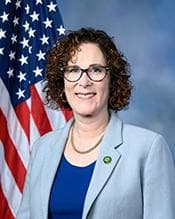
- Val Hoyle
- Cosponsors
- - 3 - 0
- Introduced
- In Committee
What this bill would do
The Wildfire Resilient Communities Act provides mandatory funding for hazardous fuels reduction projects on certain Federal lands. This includes $30,000,000,000 to be transferred to various agency heads for projects like thinning and brush removal. The bill also authorizes $3,000,000,000 for the Community Wildfire Defense Grant Program from fiscal years 2027 through 2031. Additionally, it reauthorizes and amends the Collaborative Forest Landscape Restoration Program. Finally, it establishes a County Stewardship Fund to distribute payments to counties based on forest product contract receipts.
Yes· 3 of 13
Does this better protect public land such as parks and forests?+7
The bill provides substantial mandatory funding to improve the management of federal lands through hazardous fuels reduction.
Does this improve help for people hit by a disaster?+6
Proactive wildfire mitigation reduces the future need for emergency disaster relief and FEMA intervention.
Would people in rural areas be better off under this?+6
Rural counties receive direct payments from the County Stewardship Fund and benefit from local job creation.
The opposite
Does this reduce what the federal government owes?-2
The bill mandates $30 billion in transfers and additional authorizations, which increases federal outlays.
Does this reduce what the federal government spends?-2
The bill increases federal spending through significant mandatory funding transfers.
Who it would affect, and how
Potential Positive Impacts for People
-
Wildfire Risk Reduction: Agency heads are directed to carry out hazardous fuels reduction projects, such as removing flammable vegetation or woody debris, which can include thinning and prescribed fire (Section 2(a)(4)).
-
Protection of Communities and Resources: Project priorities include areas within or adjacent to at-risk communities and high-value watersheds (Section 2(b)(2)(A)).
-
Support for Community Defense: The bill authorizes $3,000,000,000 for the Community Wildfire Defense Grant Program for the period of fiscal years 2027 through 2031 (Section 3).
-
Local Government Funding: The creation of the County Stewardship Fund allows for payments to be made to each county where a contract was carried out, which may be used for any governmental purposes (Section 5(j)(4)).
Potential Negative Impacts for People
- Administrative Costs: Up to 10 percent of the $30,000,000,000 provided for hazardous fuels reduction projects may be used for administrative and planning costs (Section 2(c)(3)).
Groups and Interests Ranking
Every group the model scored this bill for, from -10 to +10. Hover a score for the reason it gave.
- Environment Energy And Infrastructure
- Improves Public Land Management+7Improves Disaster Relief And F E M A+6Improves Environmental Protections+5Improves Rural Development+4
- Demographic And Interest Groups
- Good For Rural Residents+6Good For Native Americans+3Good For Union Workers+3Good For Urban Residents+3Good For Business Owners+2Good For Farmers+2
- Governance And Ideology
- Increases Federal Power+3
- Economy And Finance
- Increases Job Creation+3Improves Economic Growth+2Reduces Government Spending-2Reduces National Debt-2
- 9/2/2025
- 1 Cosponsor added.
- 7/10/2025
- 2 Cosponsors added.
- 7/7/2025
- Referred to the Committee on Natural Resources, and in addition to the Committee on Agriculture, for a period to be subsequently determined by the Speaker, in each case for consideration of such provisions as fall within the jurisdiction of the committee concerned.
- Introduced in House
One bill Congress.gov lists as related to this one — companions in the other chamber, earlier versions, and bills this one absorbed or was folded into.
 Janelle Bynum
Democrat · Oregon
 Jared Huffman
Democrat · California
 Andrea Salinas
Democrat · Oregon