Bill · H.R. 4257· House(119-HR-4257)
End Domestic Terrorism Act
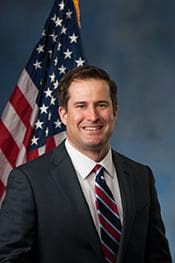
- Introduced
- 6/30/2025
- Last activity
- 6/30/2025 — Referred to the House Committee on the Judiciary.
- Sponsored by
- Seth Moulton
- Cosponsors
- - 1 - 0
- Introduced
- In Committee
What this bill would do
This bill, titled the "End Domestic Terrorism Act," seeks to amend title 18 of the United States Code. It introduces increased penalties for mass killings that involve machineguns, destructive devices, or certain semiautomatic weapons. The law targets incidents where three or more people are killed in specific locations such as schools, places of worship, or government buildings. It also includes new definitions for "covered semiautomatic weapons" and "machineguns." Additionally, the bill establishes reporting requirements for the Attorney General regarding charges filed and the impact of these offenses.
Yes
Does this put more limits on buying or owning guns?+5
The bill implements stricter legal penalties involving specific types of semiautomatic weapons, effectively acting as a deterrent/control measure.
Does this make what the government does easier for the public to see?+4
The bill mandates specific public reporting on crime statistics and government expenditures related to these incidents.
Does this give the federal government more power?+3
The bill expands federal jurisdiction and criminal penalties regarding crimes involving interstate commerce.
The opposite· 3 of 4
Would gun owners be better off under this?-5
The bill imposes higher penalties for crimes involving specific types of firearms commonly owned by enthusiasts.
Does this protect the right to own guns?-5
The bill targets specific semiautomatic weapons for increased penalties, which may be viewed as an infringement on gun ownership rights.
Does this give the government more power to monitor people inside the country?-3
The bill mandates the collection of demographic data on individuals arrested during intercepted communications.
Who it would affect, and how
Potential Positive Impacts for People
-
Increased Penalties for Serious Crimes: Individuals who kill three or more people in a single incident using specific weapons at designated locations could face imprisonment for any term of years or for life (Section 2, subsection a).
-
Transparency Through Reporting: The Attorney General is required to submit an annual report to Congress detailing cases where charges were filed, including the number of fatalities and the weapons used (Section 3).
-
Public Information on Incident Impacts: The Department of Justice must make a public report within 180 days of charges being filed, which includes the number of people present at the scene and the total amount of money spent by governments and lost by businesses (Section 5).
-
Detailed Demographic Data: The bill requires the inclusion of demographic information, such as age, gender, race, ethnicity, and nationality, for individuals arrested during intercepted communications (Section 4).
Potential Negative Impacts for People
-
Broad Definitions of Weapons: The definition of a "covered semiautomatic weapon" includes a wide variety of items, such as certain rifles with pistol grips, folding stocks, or threaded barrels, as well as certain shotguns and any AK or AR type weapons (Section 2, subsection b).
-
Broad Scope of Locations: The heightened penalties apply to a wide range of locations, including schools, places of worship, medical facilities, retail locations like grocery stores or bars, and office buildings (Section 2, subsection c).
-
Broad Scope of Circumstances: The law applies if the offense involves the use of interstate or foreign commerce, such as the transport of the weapon or the perpetrator traveling across state lines (Section 2, subsection b).
Groups and Interests Ranking
Every group the model scored this bill for, from -10 to +10. Hover a score for the reason it gave.
- Governance And Ideology
- Improves Government Transparency+4Increases Federal Power+3
- Demographic And Interest Groups
- Good For Gun Owners-5
- National Security And Foreign Policy
- Increases Domestic Surveillance-3
- Social Issues And Justice
- Improves Gun Control Measures+5Improves Second Amendment Protections-5Improves Criminal Sentencing Reform-3
- 6/30/2025
- Referred to the House Committee on the Judiciary.
- 1 Cosponsor added.
- Introduced in House
 Veronica Escobar
Democrat · Texas