Bill · H.R. 4218· House(119-HR-4218)
CLEAR Act
- Introduced
- 6/27/2025
- Last activity
- 1/21/2026 — Ordered to be Reported by the Yeas and Nays: 27 - 23.
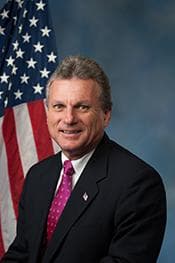
- Sponsored by
- Earl Carter
- Cosponsors
- - 8 - 0
- Introduced
What this bill would do
The "Clean Air and Economic Advancement Reform Act" (CLEAR Act) proposes several changes to the Clean Air Act. It aims to change the timing for reviewing national ambient air quality standards from five-year to 10-year intervals. The bill introduces "economic feasibility" as a factor for considering air quality standards and ozone plan requirements. It also provides States more time to correct deficiencies before federal implementation plans are issued. Additionally, the act creates a new category for "actions to mitigate wildfire risk" to be treated similarly to exceptional events. Finally, it modifies the composition and advisory duties of the independent scientific review committee.
Yes· 3 of 9
Does this leave more decisions to the states?+4
The bill provides states with more time to correct deficiencies and greater flexibility in meeting air quality standards.
Would business owners be better off under this?+3
Business owners benefit from increased regulatory flexibility and economic feasibility considerations.
Is this likely to grow the economy?+2
The bill promotes economic feasibility in air quality standards which may reduce compliance costs for businesses.
The opposite· 3 of 10
Does this cut the pollution that drives climate change?-3
The extension of the review interval and the inclusion of economic feasibility may slow down efforts to reduce emissions.
Does this better protect air, water and wildlife?-2
The bill relaxes certain air quality standards and oversight mechanisms.
Does this give the federal government more power?-2
While it grants more leeway to states, it also shifts the regulatory burden of proof towards state demonstrating control over emissions.
Who it would affect, and how
Potential Positive Impacts for People
-
State Flexibility in Air Quality Planning: Under Section 2(c), States are given at least one year to submit a plan or revision to correct a deficiency before a Federal implementation plan is promulgated. This gives local governments more time to address issues.
-
Wildfire Risk Management: Section 3(a) introduces "action to mitigate wildfire risk," which includes prescribed fires used to reduce the risk and severity of wildfires. This provides a mechanism to account for human activities intended to mirror natural events to protect land.
-
Protection from Uncontrollable Emissions: Section 3(b) allows States to avoid sanctions or fees if they can demonstrate that air quality failures were caused by emissions from outside the area, exceptional events, or mobile source emissions that are beyond the State's control.
-
Increased State Representation in Science: Section 4(a) increases the number of people representing State air pollution control agencies on the independent scientific review committee from one to three, ensuring geographic diversity across different EPA regions.
-
Consideration of Economic and Energy Effects: Section 4(b) requires the scientific review committee to assess and provide advice on any adverse public health, welfare, social, economic, or energy effects resulting from different air quality strategies.
Potential Negative Impacts for People
-
Extended Review Intervals: Section 2(a) changes the review of national ambient air quality standards from five-year intervals to 10-year intervals, which could result in standards remaining unchanged for longer periods.
-
Removal of Certain Requirements for Ozone Areas: Section 2(d) states that contingency measures shall not be required for any nonattainment area for ozone classified as an "Extreme Area."
-
Changes to Ozone Plan Requirements: Section 2(e) modifies the requirements for ozone nonattainment areas by incorporating "economic feasibility" into the standards for plan submissions.
Groups and Interests Ranking
Every group the model scored this bill for, from -10 to +10. Hover a score for the reason it gave.
- Environment Energy And Infrastructure
- Improves Public Land Management+1Reduces Carbon Emissions-3Improves Environmental Protections-2
- Economy And Finance
- Improves Economic Growth+2Improves Small Business Support+1
- Governance And Ideology
- Increase States Rights+4Improves Government Transparency+1Increases Federal Power-2
- Demographic And Interest Groups
- Good For Business Owners+3Good For Rural Residents+2Good For Farmers+1Good For Middle Class Households+1Good For Low Income Households-2Good For Urban Residents-2Good For African Americans-1Good For Children-1Good For Hispanic Americans-1Good For Retirees-1Good For Seniors-1
- 1/21/2026
- Committee Consideration and Mark-up Session Held
- Ordered to be Reported by the Yeas and Nays: 27 - 23.
- 12/10/2025
- Subcommittee Consideration and Mark-up Session Held
- Forwarded by Subcommittee to Full Committee by the Yeas and Nays: 14 - 10.
- 7/21/2025
- 1 Cosponsor added.
- 7/16/2025
- 1 Cosponsor added.
- 6/27/2025
- Referred to the House Committee on Energy and Commerce.
- Referred to the Subcommittee on Environment.
- 6 Cosponsors added.
- Introduced in House
 Rick Allen
Republican · Georgia
 Troy Balderson
Republican · Ohio
 H. Griffith
Republican · Virginia
 Robert Latta
Republican · Ohio
 Dan Newhouse
Republican · Washington
 Jay Obernolte
Republican · California
 August Pfluger
Republican · Texas
 Randy Weber
Republican · Texas