Bill · H.R. 4117· House(119-HR-4117)
Fuel Emissions Freedom Act
- Introduced
- 6/24/2025
- Last activity
- 6/24/2025 — Referred to the House Committee on Energy and Commerce.
- Sponsored by
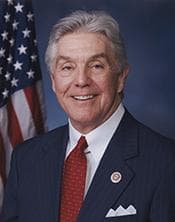
- Roger Williams
- Cosponsors
- - 4 - 0
- Introduced
- In Committee
What this bill would do
The Fuel Emissions Freedom Act aims to amend the Clean Air Act to repeal motor vehicle emission and fuel standards. It targets the repeal of existing standards under Section 202 of the Clean Air Act and various sections regarding automobile fuel economy in title 49 of the United States Code. The bill also seeks to preempt state standards through various amendments to the Clean Air Act. Furthermore, it nullifies existing Federal and State regulations or executive orders related to these standards. Finally, the Act prohibits the Federal Government and States from establishing or maintaining fuel emission standards for motor vehicles.
Yes· 3 of 10
Would business owners be better off under this?+7
The repeal of standards is designed to significantly reduce regulatory burdens and costs for businesses.
Does this make it easier to run a small business?+6
The bill specifically targets reducing burdens on small and medium-sized auto suppliers.
Is this likely to grow the economy?+5
Reducing regulatory burdens is intended to stimulate manufacturing and economic activity.
The opposite· 3 of 8
Does this leave more decisions to the states?-10
The bill explicitly prohibits states from maintaining their own fuel emission standards.
Does this better protect air, water and wildlife?-9
The bill significantly weakens environmental protections by eliminating motor vehicle emission standards.
Does this cut the pollution that drives climate change?-8
The repeal of emissions and fuel economy standards will likely lead to increased carbon emissions and pollution.
Who it would affect, and how
Potential Positive Impacts for People
-
Lowering Costs for Families: The bill states that eliminating fuel emissions standards will help lower costs for families (Section 2).
-
Regulatory Certainty for Manufacturers: The bill seeks to restore regulatory certainty by removing overlapping and ever-changing fuel emissions standards from the EPA, the State of California, and Corporate Average Fuel Economy regulations (Section 2).
-
Strengthening Manufacturing: Eliminating these standards is intended to strengthen manufacturing in the United States to ensure economic freedom (Section 2).
-
Reducing Burdens on Businesses: The bill finds that removing these standards will help reduce burdens on manufacturers and businesses, particularly small and medium-sized auto suppliers (Section 2).
Potential Negative Impacts for People
-
Repeal of Emission Standards: The bill repeals Section 202 of the Clean Air Act, which establishes motor vehicle emission and fuel standards (Section 3(a)(1)).
-
Repeal of Fuel Economy Standards: The bill repeals sections 32902 through 32918 of title 49, United States Code, which relate to automobile fuel economy (Section 3(b)(1)).
-
Nullification of Existing Regulations: The bill nullifies any Federal regulation, State law, regulation, or executive order regarding these standards that was in effect the day before the Act's enactment (Section 3(c)).
-
Prohibition of Future Standards: The bill prohibits the Federal Government and any State or political subdivision from establishing, enforcing, or maintaining fuel emission standards for motor vehicles (Section 4(a) and Section 4(b)).
Groups and Interests Ranking
Every group the model scored this bill for, from -10 to +10. Hover a score for the reason it gave.
- Environment Energy And Infrastructure
- Reduces Gas Prices+2Improves Environmental Protections-9Reduces Carbon Emissions-8Increases Renewable Energy Investment-5
- Governance And Ideology
- Improves Interstate Commerce+4Increase States Rights-10Increases Federal Power-5
- Economy And Finance
- Improves Small Business Support+6Improves Economic Growth+5Increases Job Creation+3Improves Consumer Protection-4
- Demographic And Interest Groups
- Good For Business Owners+7Good For Low Income Households+2Good For Middle Aged+2Good For Middle Class Households+2Good For Rural Residents+2Good For Urban Residents-5Good For Children-3
- 10/24/2025
- 1 Cosponsor added.
- 7/15/2025
- 1 Cosponsor added.
- 6/24/2025
- Referred to the House Committee on Energy and Commerce.
- 2 Cosponsors added.
- Introduced in House
 Michael Cloud
Republican · Texas
 Andrew Clyde
Republican · Georgia
 Brandon Gill
Republican · Texas
 Victoria Spartz
Republican · Indiana