Bill · H.R. 4081· House(119-HR-4081)
Foreign Adversary Federal Offense Act of 2025
- Introduced
- 6/23/2025
- Last activity
- 6/23/2025 — Referred to the House Committee on the Judiciary.
- Sponsored by
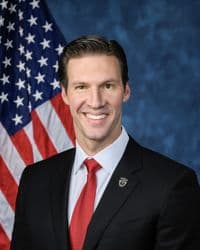
- Pat Harrigan
- Cosponsors
- - 7 - 1
- Introduced
- In Committee
What this bill would do
The Foreign Adversary Federal Offense Act of 2025 aims to amend title 18 of the United States Code. It seeks to establish mandatory minimum penalties for economic and defense espionage. These new penalties apply when such offenses are committed to advance the interests of a covered nation. The bill modifies existing laws regarding economic espionage and the gathering or transmitting of defense information. It introduces stricter fines and prison terms for these specific circumstances.
Yes· 3 of 5
Does this better protect the country from computer attacks?+7
The bill strengthens national security by providing severe deterrents against economic and defense espionage.
Would business owners be better off under this?+6
The bill protects business owners by creating harsh penalties for the theft of trade secrets.
Does this make patent and copyright rules fairer?+6
The bill provides stronger legal recourse and deterrents for those who steal trade secrets and intellectual property.
The opposite
Does this shorten or soften prison sentences?-5
The bill implements mandatory minimum sentences, which limits judicial discretion in sentencing.
Does this protect the right to fair treatment by the courts?-4
Mandatory minimums and ineligibility for supervised release can impact an individual's due process and sentencing options.
Who it would affect, and how
Potential Positive Impacts for People
-
Increased penalties for economic espionage involving covered nations: Under Section 2, individuals committing economic espionage to advance the interests of a covered nation face fines up to $5,000,000 and prison terms of 10 to 15 years, which may increase to 20 years if severe harm to economic or national security is involved (Section 2, subsection (c)(1)).
-
Stricter consequences for organizations: Section 2, subsection (c)(2) establishes that organizations committing these offenses can be fined up to $20,000,000 or five times the value of the stolen trade secret, including avoided research and design costs.
-
Enhanced penalties for defense information violations: Section 3 increases penalties for those who violate provisions regarding gathering, transmitting, or losing defense information if the violation was committed to advance the interests of a covered nation, mandating a prison term of at least 15 years up to life (Section 3).
Potential Negative Impacts for People
-
Ineligibility for supervised release: For those convicted of economic espionage to advance the interests of a covered nation, the bill mandates that the offender shall be ineligible for supervised release (Section 2, subsection (c)(1)).
-
Severe penalties for infrastructure-related information: Under Section 2, subsection (d), offenses involving nonpublic information regarding the security, design, operation, or vulnerability of critical infrastructure that poses a significant threat can result in increased prison terms of up to 20 years (Section 2, subsection (c)(1)(B)).
Groups and Interests Ranking
Every group the model scored this bill for, from -10 to +10. Hover a score for the reason it gave.
- National Security And Foreign Policy
- Improves Cybersecurity Defense+7
- Demographic And Interest Groups
- Good For Business Owners+6
- Education And Technology
- Improves Intellectual Property Fairness+6
- Economy And Finance
- Improves Economic Growth+5
- Social Issues And Justice
- Improves Criminal Sentencing Reform-5
- Governance And Ideology
- Increases Federal Power+5Improves Due Process-4
- 5/19/2026
- 1 Cosponsor added.
- 10/24/2025
- 1 Cosponsor added.
- 6/26/2025
- 1 Cosponsor added.
- 6/24/2025
- 3 Cosponsors added.
- 6/23/2025
- Referred to the House Committee on the Judiciary.
- 2 Cosponsors added.
- Introduced in House
 James Baird
Republican · Indiana
 Donald Davis
Democrat · North Carolina
 Mark Harris
Republican · North Carolina
 Brad Knott
Republican · North Carolina
 Addison McDowell
Republican · North Carolina
 Michael Rulli
Republican · Ohio
 Keith Self
Republican · Texas
 Derek Schmidt
Republican · Kansas