Bill · H.R. 4075· House(119-HR-4075)
Fire Weather Development Act of 2025
- Introduced
- 6/23/2025
- Last activity
- 6/23/2025 — Referred to the House Committee on Science, Space, and Technology.
- Sponsored by
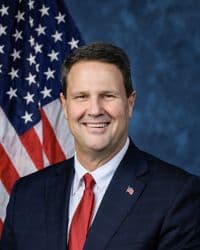
- Jeff Crank
- Cosponsors
- - 4 - 3
- Introduced
- In Committee
What this bill would do
The Fire Weather Development Act of 2025 directs the Administrator of the National Oceanic and Atmospheric Administration (NOAA) to establish a program to improve fire weather and environment forecasting, detection, and local collaboration. The bill aims to reduce loss of life, injuries, and economic damage by improving the prediction of wildfire ignition, spread, and smoke dispersion. It establishes several collaborative bodies, including an Interagency Coordinating Committee on Wildfires and a National Advisory Committee on Wildfires. Additionally, the act creates a fire weather testbed and mandates research into public safety communication standards. The legislation also addresses workforce assessments and training for Incident Meteorologists.
Yes· 3 of 6
Does this put more money into scientific research?+7
The bill funds research into fire weather, detection, and atmospheric modeling.
Does this improve help for people hit by a disaster?+6
The bill enhances preparedness and response capabilities for wildfire disasters.
Does this better protect air, water and wildlife?+5
The bill improves monitoring and prediction of wildfire environments.
The opposite
No question was scored the opposite.
Who it would affect, and how
Potential Positive Impacts for People
-
Increased Safety and Economic Protection: The program goals include developing accurate forecasts and warnings to reduce loss of life, reduce injuries, protect property, and reduce damage to the economy from wildfires (Section 2(b)).
-
Improved Wildfire Prediction and Monitoring: The bill focuses on improving the prediction of ignition, intensification, and spread of wildfires, as well as the observation of fire weather (Section 2(b)(1-2)).
-
Enhanced Smoke Dispersion Communication: The program seeks to improve the forecast and communication of smoke dispersion from wildfires (Section 2(b)(3)).
-
Better Information for Emergency Responders: The program aims to provide tools and services to support local emergency personnel and the U.S. Forest Service during response and mitigation efforts (Section 2(d)(1)).
-
Workforce Support for Meteorologists: The act requires an assessment of training challenges for Incident Meteorologists and provides for the disregard of certain premium pay calculations to assist in emergency suppression activities (Section 6).
-
Improved Communication Standards: Research is directed toward improving public safety communication coordination and integrating systems to transmit real-time data and alerts to firefighters and officials (Section 7(a)).
Potential Negative Impacts for People
- Restrictions on Technology Procurement: There is a prohibition against the Administrator procuring any unmanned aircraft system manufactured or assembled by an entity in a foreign country of concern, unless specific exemptions or waivers are granted (Section 2(i)(4)).
Groups and Interests Ranking
Every group the model scored this bill for, from -10 to +10. Hover a score for the reason it gave.
- Environment Energy And Infrastructure
- Improves Disaster Relief And F E M A+6Improves Environmental Protections+5Improves Public Land Management+5
- Education And Technology
- Increases Scientific Research Funding+7
- Demographic And Interest Groups
- Good For Rural Residents+5
- Economy And Finance
- Improves Economic Growth+3
- 11/17/2025
- 1 Cosponsor added.
- 8/12/2025
- 1 Cosponsor added.
- 6/24/2025
- 2 Cosponsors added.
- 6/23/2025
- Referred to the House Committee on Science, Space, and Technology.
- 3 Cosponsors added.
- Introduced in House
 Nicholas Begich
Republican · Alaska
 Gabe Evans
Republican · Colorado
 Scott Franklin
Republican · Florida
 Jeff Hurd
Republican · Colorado
 Joe Neguse
Democrat · Colorado
 Luz Rivas
Democrat · California
 Eugene Vindman
Democrat · Virginia