Bill · H.R. 3961· House(119-HR-3961)
To prohibit the Secretary of Defense from entering into software source code contracts with entities with certain relationships with China, and for other purposes.
- Introduced
- 6/12/2025
- Last activity
- 6/12/2025 — Referred to the House Committee on Armed Services.
- Sponsored by
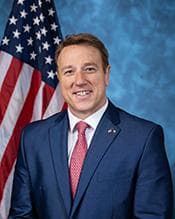
- Pat Fallon
- Cosponsors
- - 6 - 0
- Introduced
- In Committee
What this bill would do
This bill aims to prevent the Secretary of Defense from entering into, renewing, or extending contracts for software source code with specific entities. The prohibition applies to persons who have certain relationships with a "covered country," such as China. These relationships include owning or funding artificial intelligence research facilities in that country or allowing access that could lead to reverse engineering. It also covers entities operating data centers in a covered country related to the software. The Secretary of Defense has the authority to waive these restrictions if it serves national security interests.
Yes· 3 of 4
Does this better protect the country from computer attacks?+7
The bill enhances national security by preventing foreign adversaries from accessing sensitive software source code.
Does this give the federal government more power?+4
The bill expands the Secretary of Defense's authority to restrict specific software contracts based on national security.
Does this put more rules on large technology companies?+3
The bill imposes new restrictions on how tech entities interact with the Department of Defense regarding source code.
The opposite
Would business owners be better off under this?-3
The bill could negatively impact businesses that operate data centers or AI research in covered countries.
Who it would affect, and how
Potential Positive Impacts for People
-
Protection of Software Integrity: By prohibiting contracts with entities that allow a covered country to access software in a way that could allow them to reverse engineer it, the bill seeks to protect software source code. (Section 1, subsection b, number 2)
-
Security of AI Research: The bill targets entities that own or fund facilities primarily used for researching or developing artificial intelligence in a covered country, which may serve to limit foreign influence in this field. (Section 1, subsection b, number 1)
Potential Negative Impacts for People
-
Limitations on Contractual Flexibility: The Secretary of Defense is restricted from entering into, renewing, or extending certain software source code contracts for a period of three years after the act is passed. (Section 1, subsection a and subsection d)
-
Restrictions on Data Center Operations: The bill targets entities that operate data centers in a covered country, which could impact those businesses or their affiliates. (Section 1, subsection b, number 3)
Groups and Interests Ranking
Every group the model scored this bill for, from -10 to +10. Hover a score for the reason it gave.
- National Security And Foreign Policy
- Improves Cybersecurity Defense+7
- Education And Technology
- Increases Big Tech Regulation+3Improves Data Privacy+2
- Governance And Ideology
- Increases Federal Power+4
- Demographic And Interest Groups
- Good For Business Owners-3
- 6/26/2025
- 1 Cosponsor added.
- 6/12/2025
- Referred to the House Committee on Armed Services.
- 5 Cosponsors added.
- Introduced in House
 Lance Gooden
Republican · Texas
 Clay Higgins
Republican · Louisiana
 Ronny Jackson
Republican · Texas
 Jennifer Kiggans
Republican · Virginia
 Richard McCormick
Republican · Georgia
 John McGuire
Republican · Virginia