Bill · H.R. 3937· House(119-HR-3937)
Wabeno Economic Development Act
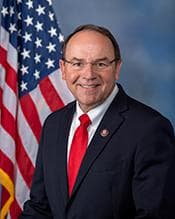
- Introduced
- 6/11/2025
- Last activity
- 7/23/2026 — Placed on Senate Legislative Calendar under General Orders. Calendar No. 494.
- Sponsored by
- Thomas Tiffany
- Cosponsors
- None
- Introduced
- Passed House
- Awaiting Senate
- On Senate calendar
What this bill would do
The Wabeno Economic Development Act provides for the transfer of specific Federal land in the Chequamegon-Nicolet National Forest to Tony's Wabeno Redi-Mix, LLC. This transfer includes all land, improvements, and mineral rights for approximately 14 acres. To receive the land, the company must pay the market value determined by an official appraisal and cover all conveyance costs. Additionally, the Act mandates a comprehensive review of how the government permits the development of stone, sand, and gravel on Federal lands. The Secretary of the Interior must submit a report detailing current processes, inefficiencies, and recommendations to streamline these operations.
Yes· 3 of 8
Would business owners be better off under this?+5
Directly benefits a specific business entity and seeks to streamline industry-wide permitting.
Is this likely to grow the economy?+4
The bill promotes economic development through land conveyance and by streamlining industrial permitting processes.
Is this likely to create jobs?+3
The bill facilitates local industrial growth and streamlining of permitting for the stone and gravel sectors.
The opposite
Does this better protect air, water and wildlife?-3
The bill transfers National Forest land and mineral rights to private ownership, reducing public land protections.
Does this better protect public land such as parks and forests?-2
The bill reduces the total acreage of the National Forest System through private conveyance.
What Congress actually voted on
One recorded vote has been taken on this bill.
- The House: a fast-track vote, needing two-thirds to passPassed 410–1
The House sets aside its normal procedure to move quickly: no amendments, little debate, and a two-thirds bar instead of a simple majority. It is used for measures expected to be uncontroversial, so a bill that fails here failed despite broad expectations that it would not.
07/22/2025 · Roll call 215 · recorded as “On Motion to Suspend the Rules and Pass, as Amended”
Who it would affect, and how
Potential Positive Impacts for People
-
Land Transfer Terms: The bill requires Tony's Wabeno Redi-Mix, LLC to pay the market value for the property as determined by a professional appraisal, which protects the interests of the United States (Section 2(a), 2(c)(2)).
-
Process Review: The Secretary of the Interior is directed to conduct a comprehensive review of Federal permitting processes for stone, sand, and gravel development to identify inefficiencies and duplicative steps (Section 3(a)).
-
Streamlining Recommendations: The review process aims to produce recommendations for legislative or administrative actions intended to streamline the permitting process (Section 3(b)(3)).
-
Economic Impact Analysis: The Secretary must submit a report that includes a summary of the economic impacts associated with current permitting timelines, specifically for the stone, sand, and gravel sectors (Section 3(b)(4)).
Potential Negative Impacts for People
-
Transfer of Resources: The Act allows for the conveyance of all right, title, and interest in the land, including mineral rights, from the United States to a private entity (Section 2(a)).
-
Land Reduction: Approximately 14 acres of National Forest System land in the Chequamegon-Nicolet National Forest will be transferred out of the National Forest System (Section 2(b)(1)).
Groups and Interests Ranking
Every group the model scored this bill for, from -10 to +10. Hover a score for the reason it gave.
- Economy And Finance
- Improves Economic Growth+4Improves Small Business Support+3Increases Job Creation+3Improves Fiscal Responsibility+2
- Demographic And Interest Groups
- Good For Business Owners+5Good For Rural Residents+3
- Environment Energy And Infrastructure
- Improves Rural Development+2Improves Environmental Protections-3Improves Public Land Management-2
- Governance And Ideology
- Improves Government Transparency+1
- 7/23/2026
- Committee on Energy and Natural Resources. Reported by Senator Lee without amendment. Without written report.
- Placed on Senate Legislative Calendar under General Orders. Calendar No. 494.
- 6/10/2026
- Committee on Energy and Natural Resources. Ordered to be reported without amendment favorably.
- 2/12/2026
- Committee on Energy and Natural Resources Subcommittee on Public Lands, Forests, and Mining. Hearings held.
- 7/23/2025
- Received in the Senate and Read twice and referred to the Committee on Energy and Natural Resources.
- 7/22/2025
- Motion to reconsider laid on the table Agreed to without objection.
- Passed/agreed to in House: On motion to suspend the rules and pass the bill, as amended Agreed to by the Yeas and Nays: (2/3 required): 410 - 1 (Roll no. 215). (text: CR H3541)
- On motion to suspend the rules and pass the bill, as amended Agreed to by the Yeas and Nays: (2/3 required): 410 - 1 (Roll no. 215). (text: CR H3541)
- Considered as unfinished business. (consideration: CR H3544-3545)
- At the conclusion of debate, the Yeas and Nays were demanded and ordered. Pursuant to the provisions of clause 8, rule XX, the Chair announced that further proceedings on the motion would be postponed.
- DEBATE - The House proceeded with forty minutes of debate on H.R. 3937.
- Considered under suspension of the rules. (consideration: CR H3541-3543)
- Mr. Tiffany moved to suspend the rules and pass the bill, as amended.
- 7/21/2025
- Reported (Amended) by the Committee on Natural Resources. H. Rept. 119-211, Part I.
- 6/25/2025
- Committee Consideration and Mark-up Session Held
- Ordered to be Reported in the Nature of a Substitute by Unanimous Consent.
- 6/11/2025
- Referred to the Committee on Agriculture, and in addition to the Committee on Natural Resources, for a period to be subsequently determined by the Speaker, in each case for consideration of such provisions as fall within the jurisdiction of the committee concerned.
- Introduced in House