Bill · H.R. 3928· House(119-HR-3928)
Improving Water Quality Certifications and American Energy Infrastructure Act
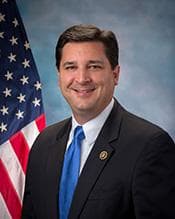
- Introduced
- 6/11/2025
- Last activity
- 6/13/2025 — Referred to the Subcommittee on Water Resources and Environment.
- Sponsored by
- David Rouzer
- Cosponsors
- None
- Introduced
- In Committee
What this bill would do
This bill, titled the ``Improving Water Quality Certifications and American Energy Infrastructure Act,'' seeks to amend the Federal Water Pollution Control Act. It focuses on changing how water quality certifications are handled. The legislation modifies the language regarding how discharges and requests are processed. It also establishes specific timelines and requirements for States, interstate agencies, and the Administrator. Finally, it narrows the basis upon which decisions to grant or deny certification requests can be made.
Yes· 3 of 5
Would business owners be better off under this?+5
The bill streamlines the water quality certification process, which can reduce regulatory uncertainty for businesses.
Does this make what the government does easier for the public to see?+4
The bill introduces requirements for written decisions and specific timelines for providing information to applicants.
Would farmers be better off under this?+3
Increased predictability in water quality certifications may benefit agricultural operations.
The opposite
Does this better protect air, water and wildlife?-4
The bill restricts the grounds on which water quality certifications can be denied, potentially weakening environmental oversight.
Does this cut the pollution that drives climate change?-3
By narrowing the scope for certification denials and requiring a direct link to violations, it may make it harder to regulate various environmental impacts.
Does this give the federal government more power?-2
The bill potentially reduces federal oversight by limiting the scope of water quality certification decisions.
Who it would affect, and how
Potential Positive Impacts for People
-
Increased Transparency and Accountability: Under Section 2, paragraph (1)(A)(v), the bill requires that the grounds for a decision to grant or deny a certification request be set forth in writing and provided to the applicant. Additionally, it requires agencies to identify any necessary additional materials or information in writing within 90 days of receiving a request.
-
Clearer Standards for Compliance: According to Section 2, paragraph (1)(A)(v), the bill requires States, interstate agencies, and the Administrator to publish specific requirements for certification within 30 days of the act's enactment. This helps individuals or entities understand how to demonstrate compliance with sections 301, 302, 303, 306, and 307.
Potential Negative Impacts for People
-
Narrower Scope for Certification Denials: Section 2, paragraph (1)(A)(v) mandates that a decision to grant or deny a request for certification must be based only on the applicable provisions of sections 301, 302, 303, 306, and 307. This limits the ability of agencies to use other criteria when making these decisions.
-
Strict Requirement for Direct Results: Section 2, paragraph (1)(A) changes the language from an activity that "may result" in a violation to one that "may directly result" in a violation. This change applies to several parts of the certification process, potentially altering how discharges are evaluated.
Groups and Interests Ranking
Every group the model scored this bill for, from -10 to +10. Hover a score for the reason it gave.
- Demographic And Interest Groups
- Good For Business Owners+5Good For Farmers+3
- Environment Energy And Infrastructure
- Improves Environmental Protections-4Reduces Carbon Emissions-3
- Governance And Ideology
- Improves Government Transparency+4Improves Due Process+3Increase States Rights+2Increases Federal Power-2
- 6/13/2025
- Referred to the Subcommittee on Water Resources and Environment.
- 6/11/2025
- Referred to the House Committee on Transportation and Infrastructure.
- Introduced in House