Bill · H.R. 3825· House(119-HR-3825)
Kelsey Smith Act
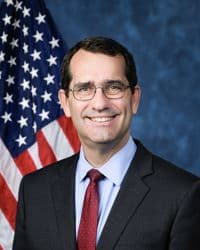
- Introduced
- 6/6/2025
- Last activity
- 6/6/2025 — Referred to the Committee on Energy and Commerce, and in addition to the Committee on the Judiciary, for a period to be subsequently determined by the Speaker, in each case for consideration of such provisions as fall within the jurisdiction of the committee concerned.
- Sponsored by
- Derek Schmidt
- Cosponsors
- - 2 - 1
- Introduced
- In Committee
What this bill would do
This bill, known as the "Kelsey Smith Act," seeks to amend the Communications Act of 1934. It would require providers of covered services to provide location information of a telecommunications device to law enforcement or public safety answering point employees. This requirement applies during emergency situations involving the risk of death or serious physical harm, or when responding to a call for emergency services. Specifically, providers must provide available location information without delay if a device was used for a 9-1-1 call in the previous 48 hours or if there is reasonable suspicion the device is held by someone in an emergency involving death or serious harm. The bill also establishes record-keeping requirements for law enforcement agencies and provides legal immunity to service providers for sharing this information.
Yes· 3 of 4
Does this give the government more power to monitor people inside the country?+4
The bill expands the ability of law enforcement to access real-time location data during emergencies.
Does this give the federal government more power?+3
The bill establishes federal requirements for service providers to disclose data to law enforcement.
Would business owners be better off under this?+3
Service providers are granted legal immunity from lawsuits related to these disclosures.
The opposite· 3 of 4
Does this protect people from being watched or searched?-6
By requiring the disclosure of location data based on reasonable suspicion, the bill significantly compromises individual privacy rights.
Does this give people more control over their personal data?-5
The bill reduces privacy protections by mandating the disclosure of location data to law enforcement without a warrant.
Does this protect the right to fair treatment by the courts?-3
The bill allows for data disclosure without the traditional judicial oversight of a warrant.
Who it would affect, and how
Potential Positive Impacts for People
-
Faster Emergency Response: Service providers must provide available location information "without delay" to help law enforcement or public safety personnel respond to emergency services or situations involving the risk of death or serious physical harm (Section 2, Subparagraph A).
-
Emergency Assistance for 9-1-1 Callers: The bill allows for location disclosure if a device was used to place a 9-1-1 call requesting emergency assistance within the preceding 48-hour period (Section 2, Subparagraph A, clause i).
-
Protection During Dangerous Situations: Law enforcement can obtain location data if there is "reasonable suspicion that the device is in the possession of an individual who is involved in an emergency situation that involves the risk of death or serious physical harm" (Section 2, Subparagraph A, clause ii).
Potential Negative Impacts for People
-
Potential Privacy Intrusion: The bill allows for the disclosure of location information based on an officer's "reasonable suspicion" regarding an individual involved in an emergency situation involving death or serious physical harm (Section 2, Subparagraph A, clause ii).
-
Reduced Legal Recourse Against Providers: The bill includes a "hold harmless" provision, stating that no person or entity can bring a court case or civil/administrative proceeding against a service provider or its employees for providing location information or assistance under these rules (Section 2, Subparagraph C).
Groups and Interests Ranking
Every group the model scored this bill for, from -10 to +10. Hover a score for the reason it gave.
- Education And Technology
- Improves Data Privacy-5
- Governance And Ideology
- Increases Federal Power+3Improves Government Transparency+2Improves Privacy Rights-6Improves Due Process-3
- National Security And Foreign Policy
- Increases Domestic Surveillance+4
- Demographic And Interest Groups
- Good For Business Owners+3
- Social Issues And Justice
- Improves Policing Reform-2
- 6/6/2025
- Referred to the Committee on Energy and Commerce, and in addition to the Committee on the Judiciary, for a period to be subsequently determined by the Speaker, in each case for consideration of such provisions as fall within the jurisdiction of the committee concerned.
- 3 Cosponsors added.
- Introduced in House
 Sharice Davids
Democrat · Kansas
 Ron Estes
Republican · Kansas
 Tracey Mann
Republican · Kansas