Bill · H.R. 3813· House(119-HR-3813)
Special Relationship Military Improvement Act of 2025
- Introduced
- 6/6/2025
- Last activity
- 6/6/2025 — Referred to the House Committee on Foreign Affairs.
- Sponsored by
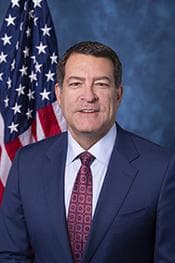
- Mark Green
- Cosponsors
- None
- Introduced
- In Committee
What this bill would do
This bill, titled the "Special Relationship Military Improvement Act of 2025," seeks to amend the Arms Export Control Act. It aims to provide the United Kingdom with an exemption for licensing defense items for export without requiring a relevant bilateral agreement. Additionally, it modifies exceptions for defense cooperation treaties. The legislation specifically addresses exemptions related to the Treaty Between the United States of America and Australia.
Yes· 3 of 4
Does this strengthen ties with allied countries?+5
The bill strengthens defense cooperation with the United Kingdom and Australia through licensing exemptions.
Does this favour talking over confrontation abroad?+3
It streamlines defense trade procedures with key allies.
Does this make trade with other countries easier?+2
It facilitates easier export of defense items to specific allies.
The opposite
No question was scored the opposite.
Who it would affect, and how
Potential Positive Impacts for People
-
Exemption for the United Kingdom: By amending Section 38 of the Arms Export Control Act, the bill provides an exemption for the United Kingdom from licensing requirements for the export of defense items without needing a bilateral agreement (Section 2).
-
Exception for Defense Cooperation Treaties: The bill provides an exception to the requirement of concluding a bilateral agreement for the purpose of giving effect to the Treaty Between the Government of the United States of America and the Government of Australia Concerning Defense Trade Cooperation (Section 2, subparagraph (D)).
Potential Negative Impacts for People
- Exclusions from Australian Defense Cooperation: The bill specifies several items that are excluded from the exception for defense cooperation treaties with Australia, which could impact the scope of the treaty. These exclusions include:
- Rocket and UAV Systems: Complete rocket systems, such as ballistic missile systems or space launch vehicles, and unmanned aerial vehicle systems capable of delivering specific payloads and ranges (Section 2, subparagraph (D)(i)).
- Rocket Components: Individual rocket stages, re-entry vehicles, and various engines or guidance sets (Section 2, subparagraph (D)(ii)).
- Missile Technology Items: Defense articles and services listed in the Missile Technology Control Regime Annex Category II used in rocket systems (Section 2, subparagraph (D)(iii)).
- Biological and Toxicological Agents: Specific agents and equipment listed in the United States Munitions List (Section 2, subparagraph (D)(iv)).
- Nuclear Weapon Technology: Defense articles and services specific to the design and testing of nuclear weapons (Section 2, subparagraph (D)(v)).
- Regulatory Restrictions: Defense articles that Australian laws or commitments would prevent Australia from enforcing under the treaty (Section 2, subparagraph (D)(vi)).
Groups and Interests Ranking
Every group the model scored this bill for, from -10 to +10. Hover a score for the reason it gave.
- National Security And Foreign Policy
- Improves International Alliances+5Improves Diplomatic Engagement+3Improves International Trade+2
- Governance And Ideology
- Increases Federal Power+1
- 6/6/2025
- Referred to the House Committee on Foreign Affairs.
- Introduced in House