Bill · H.R. 3787· House(119-HR-3787)
Emergency Spending Accountability Act
- Introduced
- 6/5/2025
- Last activity
- 6/12/2025 — Sponsor introductory remarks on measure. (CR H2661)
- Sponsored by
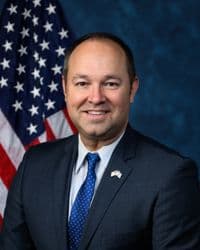
- Marlin Stutzman
- Cosponsors
- - 8 - 0
- Introduced
What this bill would do
The Emergency Spending Accountability Act requires the Director of the Office of Management and Budget to offset emergency spending through sequestration. This process involves reducing total budgetary resources to equal one-fifth of the total emergency spending amount. The sequestration applies to either discretionary or direct spending accounts depending on the nature of the spending. Certain programs, such as Social Security, National Defense, and Veterans Affairs, are exempt from these reductions. Additionally, the bill requires detailed justifications for any measures that include emergency spending.
Yes· 3 of 11
Does this make the government pay for what it commits to?+7
By requiring offsets and detailed justifications, the bill enforces stricter fiscal discipline regarding emergency spending.
Does this reduce what the federal government spends?+6
The mandate for sequestration specifically seeks to reduce total budgetary resources by one-fifth of emergency spending levels.
Does this make what the government does easier for the public to see?+6
The bill increases transparency by requiring detailed justifications for emergency spending in congressional reports.
The opposite
Does this improve help for people hit by a disaster?-5
The bill could negatively impact disaster relief if such spending is categorized as emergency spending and not explicitly exempted.
Would households on low incomes be better off under this?-3
Non-exempt social programs could face budget reductions, potentially impacting low-income households.
Who it would affect, and how
Potential Positive Impacts for People
-
Increased Accountability for Spending: The bill requires a detailed justification for why emergency spending is necessary, including why it meets the definitions of "emergency" and "unanticipated" (Section 2, subsection d).
-
Protection for Essential Programs: Certain critical programs are exempt from the required budget reductions, ensuring their stability (Section 2, subsection c):
- Social Security and Railroad Retirement: Benefits payable under the old-age, survivors, and disability insurance program and the Railroad Retirement Act of 1937 are protected (Section 2, subsection c, paragraph 1).
- National Defense: Accounts within budget function 050 are exempt (Section 2, subsection c, paragraph 2).
- Veterans Affairs: All programs administered by the Department of Veterans Affairs are exempt (Section 2, subsection c, paragraph 3).
- Medicare: The Medicare program under title XVIII of the Social Security Act is protected from sequestration (Section 2, subsection c, paragraph 4).
Potential Negative Impacts for People
- Reductions in Non-Exempt Programs: The bill mandates a sequestration that reduces budgetary resources at a uniform rate across all non-exempt programs and activities (Section 2, subsection b). This could result in cuts to various discretionary or direct spending accounts that are not explicitly listed as exempt (Section 2, subsection b, paragraph 1).
Groups and Interests Ranking
Every group the model scored this bill for, from -10 to +10. Hover a score for the reason it gave.
- Economy And Finance
- Improves Fiscal Responsibility+7Reduces Government Spending+6Reduces National Debt+5
- Demographic And Interest Groups
- Good For Retirees+5Good For Seniors+5Good For Veterans+5Good For Low Income Households-3
- Healthcare
- Improves Veterans Healthcare+5Increases Medicare Funding+5
- Governance And Ideology
- Improves Government Transparency+6
- Environment Energy And Infrastructure
- Improves Disaster Relief And F E M A-5
- National Security And Foreign Policy
- Improves Veterans Benefits+5
- Social Issues And Justice
- Improves Social Security+5
- 6/12/2025
- Sponsor introductory remarks on measure. (CR H2661)
- 6/6/2025
- 1 Cosponsor added.
- 6/5/2025
- Referred to the Committee on the Budget, and in addition to the Committee on Rules, for a period to be subsequently determined by the Speaker, in each case for consideration of such provisions as fall within the jurisdiction of the committee concerned.
- 7 Cosponsors added.
- Introduced in House
 Sheri Biggs
Republican · South Carolina
 Paul Gosar
Republican · Arizona
 Glenn Grothman
Republican · Wisconsin
 Lance Gooden
Republican · Texas
 Ralph Norman
Republican · South Carolina
 Scott Perry
Republican · Pennsylvania
 Keith Self
Republican · Texas
 Jefferson Shreve
Republican · Indiana