Bill · H.R. 3745· House(119-HR-3745)
American Neighborhoods Protection Act of 2025
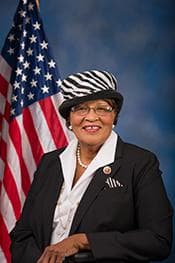
- Introduced
- 6/5/2025
- Last activity
- 6/5/2025 — Referred to the Committee on Ways and Means, and in addition to the Committee on Financial Services, for a period to be subsequently determined by the Speaker, in each case for consideration of such provisions as fall within the jurisdiction of the committee concerned.
- Sponsored by
- Alma Adams
- Cosponsors
- - 4 - 0
- Introduced
- In Committee
What this bill would do
The American Neighborhoods Protection Act of 2025 aims to prohibit individuals and entities from owning more than 75 single-family residences. It imposes an excise tax of $10,000 for each residence owned over that 75-unit limit. This tax applies to covered taxpayers, though certain groups like mortgage note holders and non-profits are exempt. The revenue generated from this tax will be transferred into a new Housing Trust Fund. This fund is intended to provide grants to State housing finance agencies. These grants will support programs that offer down payment assistance to families purchasing homes.
Yes· 3 of 5
Does this make housing cost less?+8
The bill creates a Housing Trust Fund to provide down payment assistance to families purchasing homes.
Would households on low incomes be better off under this?+7
The bill provides down payment assistance which can help low-income families achieve homeownership.
Would middle-income households be better off under this?+5
The assistance program specifically targets families seeking to purchase single-family residences.
The opposite· 3 of 4
Would business owners be better off under this?-5
Large-scale real estate owners/entities will face high excise taxes and reporting penalties.
Would people with substantial wealth be better off under this?-5
Individuals with extensive property holdings will be subject to the new excise tax.
Would the very wealthiest people be better off under this?-5
The bill penalizes extreme concentration of residential property ownership.
Who it would affect, and how
Potential Positive Impacts for People
-
Down Payment Assistance for Families: The bill establishes a program where the Secretary of Housing and Urban Development provides grants to State housing finance agencies to help families purchase homes (Section 3(b)(1)).
-
Priority for Specific Home Buyers: State housing agencies receiving these grants will prioritize families seeking assistance to purchase single-family residences that are sold or transferred by a covered taxpayer (Section 3(b)(2)).
-
Creation of a Housing Trust Fund: A new trust fund will be established in the Treasury to manage funds specifically for down payment assistance grants (Section 3(a)(1)).
Potential Negative Impacts for People
-
Financial Burden on Large Property Owners: A tax of $10,000 is imposed for every single-family residence owned beyond the limit of 75 (Section 2(a)).
-
Penalties for Reporting Failures: Any person who fails to report required information or provides incorrect information faces a $5,000 penalty (Section 2(d)(2)(A)).
-
Strict Ownership Definitions: The law defines "own" as having a direct majority ownership interest, which could affect how property transfers are treated for tax purposes (Section 2(c)(2)(A)).
Groups and Interests Ranking
Every group the model scored this bill for, from -10 to +10. Hover a score for the reason it gave.
- Demographic And Interest Groups
- Good For Low Income Households+7Good For Middle Class Households+5Good For Billionaires-5Good For Business Owners-5Good For High Net Worth Individuals-5Good For Ultra High Net Worth Individuals-5
- Social Issues And Justice
- Improves Affordable Housing+8
- Economy And Finance
- Increases Wealthy Taxes+5
- Governance And Ideology
- Increases Federal Power+3
- 6/23/2025
- 1 Cosponsor added.
- 6/5/2025
- Referred to the Committee on Ways and Means, and in addition to the Committee on Financial Services, for a period to be subsequently determined by the Speaker, in each case for consideration of such provisions as fall within the jurisdiction of the committee concerned.
- 3 Cosponsors added.
- Introduced in House
 Yassamin Ansari
Democrat · Arizona
 Cleo Fields
Democrat · Louisiana
 LaMonica McIver
Democrat · New Jersey
 Bennie Thompson
Democrat · Mississippi