Bill · H.R. 3730· House(119-HR-3730)
FARE Act
- Introduced
- 6/4/2025
- Last activity
- 6/5/2025 — Referred to the Subcommittee on Railroads, Pipelines, and Hazardous Materials.
- Sponsored by
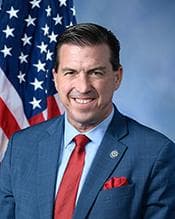
- Kevin Mullin
- Cosponsors
- None
- Introduced
- In Committee
What this bill would do
This bill, known as the "Forging Ahead on Rail Electrification Act" or the "FARE Act," directs the Chairman of the Surface Transportation Board to create an advisory committee. The committee is tasked with studying and issuing recommendations regarding barriers to rail electrification. This includes looking into research and development needs to help reduce those barriers. The committee members will represent a diverse group of interested and affected parties. Reports must be submitted to specific House and Senate committees every two years. The committee is scheduled to terminate 10 years after the Act is enacted.
Yes· 3 of 11
Does this cut the pollution that drives climate change?+3
The study of rail electrification is a step toward reducing carbon emissions through cleaner transit energy sources.
Does this improve buses, trains and other public transport?+3
The bill directly supports the modernization and electrification of rail transit systems.
Does this better protect air, water and wildlife?+1
Transitioning to electric rail can lead to cleaner air and more sustainable environmental practices.
The opposite
No question was scored the opposite.
Who it would affect, and how
Potential Positive Impacts for People
-
Identification of obstacles to rail electrification: The advisory committee will study and issue recommendations regarding barriers to rail electrification, including research and development needs to mitigate such barriers (Section 2(a)). This could help address issues preventing the transition to electric rail.
-
Diverse stakeholder representation: The committee membership is required to represent a balance of interested and affected parties, including passenger railroads, freight railroads, electric utilities, electric equipment manufacturers, rail equipment manufacturers, State governments, and relevant Federal agencies (Section 2(b)). This ensures various perspectives are considered in the study.
Potential Negative Impacts for People
- No specific negative impacts are mentioned in the text of the bill.
Groups and Interests Ranking
Every group the model scored this bill for, from -10 to +10. Hover a score for the reason it gave.
- Environment Energy And Infrastructure
- Improves Public Transit+3Reduces Carbon Emissions+3Improves Environmental Protections+1Increases Renewable Energy Investment+1Reduces Fossil Fuel Production+1
- Demographic And Interest Groups
- Good For Business Owners+1Good For Union Workers+1Good For Urban Residents+1
- Economy And Finance
- Improves Economic Growth+1Increases Job Creation+1
- Education And Technology
- Increases Scientific Research Funding+1
- 6/5/2025
- Referred to the Subcommittee on Railroads, Pipelines, and Hazardous Materials.
- 6/4/2025
- Referred to the Committee on Transportation and Infrastructure, and in addition to the Committee on Science, Space, and Technology, for a period to be subsequently determined by the Speaker, in each case for consideration of such provisions as fall within the jurisdiction of the committee concerned.
- Introduced in House