Bill · H.R. 3647· House(119-HR-3647)
SAFE CROSS Act
- Introduced
- 5/29/2025
- Last activity
- 5/30/2025 — Referred to the Subcommittee on Railroads, Pipelines, and Hazardous Materials.
- Sponsored by
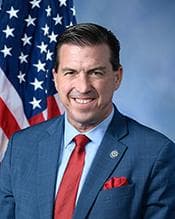
- Kevin Mullin
- Cosponsors
- - 0 - 1
- Introduced
- In Committee
What this bill would do
This bill directs the Administrator of the Federal Railroad Administration to conduct a study regarding the use of artificial intelligence enabled sensors at rail crossings. The goal is to identify the potential benefits and challenges of using this technology as a safety measure to reduce traffic and pedestrian accidents. The study must include a review of existing pilot programs and any current deployments of these sensors. Additionally, the Administrator must perform a cost-benefit analysis comparing these AI sensors to other safety measures like grade separations. Finally, the results and recommended best practices must be published on a public website.
Yes· 3 of 6
Does this repair or build roads and bridges?+3
The study examines technology to enhance safety at rail crossings, which indirectly improves transportation infrastructure safety.
Does this improve buses, trains and other public transport?+2
Improving rail crossing safety via AI technology supports safer public and private rail infrastructure.
Does this make what the government does easier for the public to see?+2
The bill requires the publication of study results and best practices on a publicly accessible website.
The opposite
No question was scored the opposite.
Who it would affect, and how
Potential Positive Impacts for People
-
Reduction in accidents: The study aims to identify how AI-enabled sensors can serve as a safety measure to reduce pedestrian and traffic accidents at rail crossings (Section 2(a)).
-
Informed safety decisions: By requiring a cost-benefit analysis, the bill looks at comparing AI sensors against other safety enhancement measures, such as grade separations (Section 2(b)(2)).
-
Access to safety information: The Administrator is required to publish study results, best practices, and recommendations to a publicly accessible website (Section 2(c)).
-
Guidance for various entities: The published best practices and recommendations are intended for use by Federal, State, Tribal, and local governmental entities, as well as private entities legally required to maintain safety technology at rail crossings (Section 2(c)(2)).
Potential Negative Impacts for People
- No specific negative impacts are identified in the provided text.
Groups and Interests Ranking
Every group the model scored this bill for, from -10 to +10. Hover a score for the reason it gave.
- Environment Energy And Infrastructure
- Improves Roads And Bridges+3Improves Public Transit+2
- Demographic And Interest Groups
- Good For Rural Residents+1Good For Urban Residents+1
- Governance And Ideology
- Improves Government Transparency+2
- Education And Technology
- Increases Scientific Research Funding+1
- 2/10/2026
- 1 Cosponsor added.
- 5/30/2025
- Referred to the Subcommittee on Railroads, Pipelines, and Hazardous Materials.
- 5/29/2025
- Referred to the House Committee on Transportation and Infrastructure.
- Introduced in House
 Mark Alford
Republican · Missouri