Bill · H.R. 3635· House(119-HR-3635)
Foreign Adversary Investment Prohibition Act
- Introduced
- 5/29/2025
- Last activity
- 5/29/2025 — Referred to the Committee on Financial Services, and in addition to the Committee on Agriculture, for a period to be subsequently determined by the Speaker, in each case for consideration of such provisions as fall within the jurisdiction of the committee concerned.
- Sponsored by
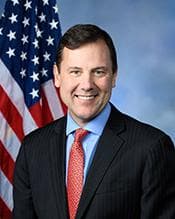
- Thomas Kean
- Cosponsors
- - 0 - 1
- Introduced
- In Committee
What this bill would do
This bill, titled the ``Foreign Adversary Investment Prohibition Act'', aims to prevent Members of Congress from participating in certain financial activities with foreign adversaries. It prohibits Members from conducting covered financial transactions that directly or indirectly benefit a foreign adversary or an entity they own or operate. The bill defines a foreign adversary to include countries such as the People's Republic of China, Cuba, Iran, North Korea, Russia, and Venezuela. It also defines covered financial transactions to include gifts, loans, investments in securities or commodities, and certain economic interests acquired through derivatives. To ensure accountability, the Attorney General is authorized to bring civil actions against violators.
Yes
Does this make what the government does easier for the public to see?+6
The bill increases transparency and accountability by prohibiting financial conflicts of interest with foreign adversaries.
Does this give the federal government more power?+5
The bill empowers the Attorney General to bring civil actions against Members of Congress.
The opposite
No question was scored the opposite.
Who it would affect, and how
Potential Positive Impacts for People
-
Increased Accountability for Officials: By prohibiting Members of Congress from conducting financial transactions that benefit a foreign adversary, the bill aims to prevent conflicts of interest during their term of service (Section 2(a)).
-
Enforcement of Standards: The bill provides a mechanism for the Attorney General to bring civil actions in court against those who violate these rules, ensuring there are consequences for non-compliance (Section 2(b)(1)).
-
Clear Penalties for Violations: The bill establishes specific financial penalties for those found to have violated the prohibition, ranging from $5,000 for a first violation up to $15,000 for subsequent violations (Section 2(b)(2)).
Potential Negative Impacts for People
-
Financial Penalties for Members: Members of Congress who violate the provisions of this act face civil penalties of up to $5,000 for a first offense, $10,000 for a second, and $15,000 for each violation thereafter (Section 2(b)(2)).
-
Legal Risk via Civil Action: The Attorney General has the authority to bring a civil action against any person they believe is engaging in conduct that violates the prohibition, which could lead to legal proceedings (Section 2(b)(1)).
Groups and Interests Ranking
Every group the model scored this bill for, from -10 to +10. Hover a score for the reason it gave.
- Governance And Ideology
- Improves Government Transparency+6Increases Federal Power+5
- 5/29/2025
- Referred to the Committee on Financial Services, and in addition to the Committee on Agriculture, for a period to be subsequently determined by the Speaker, in each case for consideration of such provisions as fall within the jurisdiction of the committee concerned.
- 1 Cosponsor added.
- Introduced in House
 Hillary Scholten
Democrat · Michigan