Bill · H.R. 3568· House(119-HR-3568)
AG RESEARCH Act
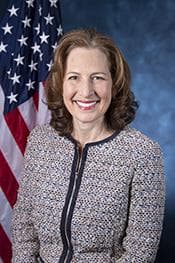
- Introduced
- 5/21/2025
- Last activity
- 5/21/2025 — Referred to the House Committee on Agriculture.
- Sponsored by
- Kim Schrier
- Cosponsors
- - 1 - 1
- Introduced
- In Committee
What this bill would do
The AG RESEARCH Act aims to amend existing laws to address deferred maintenance at agricultural research facilities. The bill establishes a competitive grant program within the National Institute of Food and Agriculture to fund the construction, modernization, or repair of these facilities and their equipment. To support this, the bill mandates a $500,000,000 annual transfer from the Treasury to the Secretary starting October 1, 2025, through 2029. It also authorizes up to $1,000,000,000 per fiscal year from 2026 through 2030 for related study and design costs. The legislation seeks to ensure that United States agricultural research remains globally competitive through necessary infrastructure investments.
Yes· 3 of 11
Does this put more money into scientific research?+6
The bill provides significant funding for agricultural scientific research and infrastructure.
Would farmers be better off under this?+5
Improved agricultural research directly supports the productivity and competitiveness of the farming industry.
Does this put more money into medical research?+5
The bill specifically increases funding for agricultural research through facility modernization.
The opposite
No question was scored the opposite.
Who it would affect, and how
Potential Positive Impacts for People
-
Support for Agricultural Infrastructure: The bill provides for the construction, alteration, acquisition, modernization, renovation, or remodeling of agricultural research facilities and equipment (Section 2(c)). This helps address the rising costs of deferred maintenance noted in the findings (Section 2(a)).
-
Equitable Access to Funding: The grant program is designed to ensure an equitable geographic distribution of funds, an equitable distribution to diverse institutions, and an equitable distribution to institutions with various sizes and areas of study (Section 2(c)(2)).
-
Flexible Funding for High-Need Projects: The Secretary has the authority to provide up to 100 percent of costs for certain projects on a case-by-case basis (Section 2(c)(1)).
-
Increased Research Competitiveness: By investing in infrastructure, the bill intends to ensure that United States agricultural research remains globally competitive (Section 2(a)(5)).
Potential Negative Impacts for People
- State Funding Caps: The bill limits the amount of money any single State can receive, stating that no more than 20 percent of the available amounts can be awarded to projects in any one State (Section 2(c)(3)).
Groups and Interests Ranking
Every group the model scored this bill for, from -10 to +10. Hover a score for the reason it gave.
- Demographic And Interest Groups
- Good For Farmers+5Good For Business Owners+3Good For Rural Residents+3Good For Students+3
- Economy And Finance
- Improves Economic Growth+4Increases Job Creation+3
- Education And Technology
- Increases Scientific Research Funding+6
- Healthcare
- Increases Research Funding+5
- Environment Energy And Infrastructure
- Improves Rural Development+3
- National Security And Foreign Policy
- Improves International Trade+2
- Governance And Ideology
- Increases Federal Power+1
- 10/28/2025
- 1 Cosponsor added.
- 5/21/2025
- Referred to the House Committee on Agriculture.
- 1 Cosponsor added.
- Introduced in House
One bill Congress.gov lists as related to this one — companions in the other chamber, earlier versions, and bills this one absorbed or was folded into.
 Josh Harder
Democrat · California
 Tracey Mann
Republican · Kansas