Bill · H.R. 3561· House(119-HR-3561)
FORCE Act
- Introduced
- 5/21/2025
- Last activity
- 5/21/2025 — Referred to the House Committee on Financial Services.
- Sponsored by
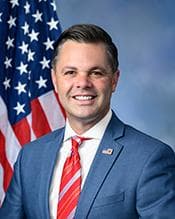
- Zachary Nunn
- Cosponsors
- - 0 - 1
- Introduced
- In Committee
What this bill would do
This bill, known as the "FORCE Act," establishes a National Defense Executive Reserve to improve federal preparedness for national defense emergencies. This reserve allows private individuals with unique expertise to volunteer, receive training, and take on temporary federal roles during emergencies. Specific reserve units would be created within the Departments of Commerce, Defense, and Homeland Security. The President can activate these units during a declared national emergency to augment government capabilities efficiently. Additionally, the bill updates rules regarding voluntary agreements to ensure they address critical national defense issues, such as responding to catastrophic cyber attacks.
Yes· 3 of 5
Does this better protect the country from computer attacks?+7
The bill specifically addresses responding to and restoring critical infrastructure following catastrophic cyber attacks.
Does this improve help for people hit by a disaster?+6
The bill provides employment protections similar to those granted to FEMA intermittent personnel during emergencies.
Does this reduce what the federal government spends?+5
The bill provides a cost-efficient way to expand government capacity without adding full-time employees.
The opposite
No question was scored the opposite.
Who it would affect, and how
Potential Positive Impacts for People
-
Expertise Utilization: The bill allows private persons with unique expertise to volunteer and be temporarily employed in Federal positions during national defense emergencies, which improves government preparedness (Section 2(a)(1)).
-
Efficient Government Response: The Reserve provides a cost-efficient way to expand Federal Government capacity for managing future national defense emergencies without the need to dramatically expand the number of full-time employees (Section 2(a)(3)).
-
Employment Security: Individuals who are absent from their regular jobs due to service in the Reserve are provided with the same employment and reemployment protections as those serving as intermittent personnel in FEMA (Section 2(h)).
-
Cyber Attack Preparedness: The bill directs the development of voluntary agreements that could address critical issues like responding to and restoring critical infrastructure after a catastrophic cyber attack (Section 3(b)(2)(A)(i)).
Potential Negative Impacts for People
-
Conflict of Interest Risks: The bill acknowledges the potential for "real or perceived conflicts of interest or other harms" that could be created by the temporary employment of private persons within the Reserve (Section 2(a)(4)).
-
Mandatory Agency Setup: The President must require the heads of the Departments of Commerce, Defense, and Homeland Security to establish these reserve units within 180 days of certain rule issuances (Section 2(c)(1) and (2)).
Groups and Interests Ranking
Every group the model scored this bill for, from -10 to +10. Hover a score for the reason it gave.
- Economy And Finance
- Reduces Government Spending+5Improves Fiscal Responsibility+3
- National Security And Foreign Policy
- Improves Cybersecurity Defense+7
- Environment Energy And Infrastructure
- Improves Disaster Relief And F E M A+6
- Governance And Ideology
- Increases Federal Power+4
- 5/21/2025
- Referred to the House Committee on Financial Services.
- 1 Cosponsor added.
- Introduced in House
 James Himes
Democrat · Connecticut