Bill · H.R. 3539· House(119-HR-3539)
Leadership in CET Act
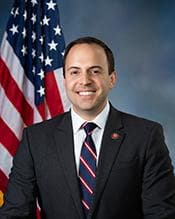
- Introduced
- 5/21/2025
- Last activity
- 5/21/2025 — Referred to the House Committee on the Judiciary.
- Sponsored by
- Lance Gooden
- Cosponsors
- - 0 - 1
- Introduced
- In Committee
What this bill would do
This bill, known as the "Leadership in Critical and Emerging Technologies Act," directs the United States Patent and Trademark Office to create a pilot program. The program aims to speed up the examination process for patent applications involving specific critical and emerging technologies. These technologies include certain artificial intelligence capabilities, semiconductor design, and quantum information science. The program is intended to encourage United States innovation and leadership by ensuring these applications receive prompt consideration. The Director of the patent office has the authority to set participation requirements and may waive certain fees. The program will have specific expiration dates or limits based on the number of applications accepted.
Yes· 3 of 6
Does this make it easier to run a small business?+4
The ability for the Director to waive petition fees reduces the financial barrier for inventors participating in the pilot program.
Would business owners be better off under this?+4
Business owners and inventors in technical fields benefit from faster patent processing and potential fee waivers.
Is this likely to create jobs?+3
Expediting patent examination for critical technologies like AI and semiconductors is intended to encourage domestic innovation and leadership.
The opposite
No question was scored the opposite.
Who it would affect, and how
Potential Positive Impacts for People
-
Faster Patent Processing for Critical Technologies: The pilot program aims to expedite the examination of "covered applications" to ensure they receive prompt consideration (Section 2(b) and 2(c)). This could benefit inventors working in fields like artificial intelligence, semiconductors, and quantum science.
-
Reduced Costs for Applicants: The Director has the authority to waive the petition fee or other requirements related to existing accelerated examination programs (Section 2(d)(2)). This could lower the financial burden on those participating in the pilot program.
-
Encouraging Innovation: By providing faster consideration for specific technologies, the program's purpose is to encourage innovation and leadership by the United States (Section 2(c)).
Potential Negative Impacts for People
-
Restrictions on Inventors: To qualify for the program, an inventor must certify that they have not been named as an inventor on more than 4 other covered applications submitted under this specific pilot program (Section 2(e)(1)(B)). This creates a cap on how many times a single inventor can utilize this specific expedited process.
-
Exclusion of Certain Entities: The program specifically excludes applicants that are "foreign entities of concern" (Section 2(e)(1)(A)). This means certain individuals or groups based on their entity status will not be able to access these benefits.
Groups and Interests Ranking
Every group the model scored this bill for, from -10 to +10. Hover a score for the reason it gave.
- Economy And Finance
- Improves Small Business Support+4Increases Job Creation+3
- Demographic And Interest Groups
- Good For Business Owners+4
- Governance And Ideology
- Improves Government Transparency+3
- Education And Technology
- Increases Scientific Research Funding+2
- National Security And Foreign Policy
- Improves Cybersecurity Defense+2
- 5/21/2025
- Referred to the House Committee on the Judiciary.
- 1 Cosponsor added.
- Introduced in House
One bill Congress.gov lists as related to this one — companions in the other chamber, earlier versions, and bills this one absorbed or was folded into.
 Deborah Ross
Democrat · North Carolina