Bill · H.R. 3459· House(119-HR-3459)
Empty Lots to Housing Act
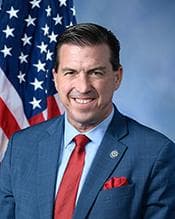
- Introduced
- 5/15/2025
- Last activity
- 5/15/2025 — Referred to the Subcommittee on Highways and Transit.
- Sponsored by
- Kevin Mullin
- Cosponsors
- - 11 - 4
- Introduced
- In Committee
What this bill would do
This bill is known as the Empty Lots to Housing Act. It allows certain real property that is no longer needed for its original purpose to be transferred. The Secretary may authorize a recipient of assistance to transfer this property to local governmental authorities or nonprofit organizations. It can also be transferred to third-party entities under specific conditions. The main goal of these transfers is the development of transit-oriented dwelling units. Any entity receiving the property must agree to certain housing reservation rules for a 30-year period.
Yes· 3 of 10
Would households on low incomes be better off under this?+8
The bill specifically targets housing affordability for families with low incomes.
Does this make housing cost less?+7
The bill facilitates the development of affordable housing through the transfer of unused federal property.
Would people in cities be better off under this?+5
Transit-oriented development often focuses on and benefits urban residential areas.
The opposite
No question was scored the opposite.
Who it would affect, and how
Potential Positive Impacts for People
-
Section 2 adding Sec. 180(a)(1) allows the transfer of unneeded property to local governments or nonprofits to build transit-oriented housing, which helps communities get more housing.
-
Section 2 adding Sec. 180(b)(1) requires that at least 40 percent of the housing units developed on the transferred property must be reserved for families with lower incomes, with rent capped at 30 percent of their adjusted income, making housing more affordable for working families.
-
Section 2 adding Sec. 180(b)(2) requires that at least 20 percent of those reserved units must be set aside for families with incomes at or below 30 percent of the area median income, helping the families who need affordable housing the most.
Potential Negative Impacts for People
- The provided text does not contain any explicit negative consequences or burdens for individuals or groups of people.
Groups and Interests Ranking
Every group the model scored this bill for, from -10 to +10. Hover a score for the reason it gave.
- Demographic And Interest Groups
- Good For Low Income Households+8Good For Urban Residents+5Good For Business Owners+3Good For Middle Class Households+3
- Social Issues And Justice
- Improves Affordable Housing+7Improves Poverty Reduction+5Reduces Homelessness+4
- Environment Energy And Infrastructure
- Improves Public Transit+5Improves Public Land Management+3
- Governance And Ideology
- Increases Federal Power+2
- 6/11/2026
- 1 Cosponsor added.
- 5/20/2026
- 1 Cosponsor added.
- 1/20/2026
- 1 Cosponsor added.
- 12/11/2025
- 1 Cosponsor added.
- 10/24/2025
- 1 Cosponsor added.
- 9/30/2025
- 1 Cosponsor added.
- 8/19/2025
- 2 Cosponsors added.
- 7/10/2025
- 1 Cosponsor added.
- 6/12/2025
- 1 Cosponsor added.
- 6/4/2025
- 1 Cosponsor added.
- 5/21/2025
- 3 Cosponsors added.
- 5/15/2025
- Referred to the House Committee on Transportation and Infrastructure.
- Referred to the Subcommittee on Highways and Transit.
- 1 Cosponsor added.
- Introduced in House
 Jake Auchincloss
Democrat · Massachusetts
 Robert Bresnahan
Republican · Pennsylvania
 Sharice Davids
Democrat · Kansas
 Chuck Edwards
Republican · North Carolina
 Brian Fitzpatrick
Republican · Pennsylvania
 Laura Friedman
Democrat · California
 Robert Garcia
Democrat · California
 Maggie Goodlander
Democrat · New Hampshire
 Steven Horsford
Democrat · Nevada
 Josh Harder
Democrat · California
 Kristen McDonald Rivet
Democrat · Michigan
 Zachary Nunn
Republican · Iowa
 Scott Peters
Democrat · California
 Shri Thanedar
Democrat · Michigan
 Debbie Wasserman Schultz
Democrat · Florida