Bill · H.R. 3444· House(119-HR-3444)
Tribal Self-Determination and Co-Management in Forestry Act of 2025
- Introduced
- 5/15/2025
- Last activity
- 6/10/2025 — Subcommittee Hearings Held
- Sponsored by
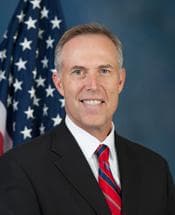
- Jared Huffman
- Cosponsors
- - 6 - 0
- Introduced
- In Committee
What this bill would do
This bill, titled the "Tribal Self-Determination and Co-Management in Forestry Act of 2025," directs Federal land management agencies under the Department of the Interior to create Tribal Co-Management Plans. These plans involve managing activities and services on lands that are historically, culturally, or geographically related to specific Indian Tribes. Additionally, the bill authorizes the Secretary of Agriculture to enter into agreements with Indian Tribes and Tribal organizations to perform various Forest Service activities. It also mandates training for Department of the Interior employees to incorporate indigenous knowledge and understand Tribal history. The Act provides for the periodic review of agreements and establishes a framework for payments and data sovereignty.
Yes· 3 of 9
Would Native Americans be better off under this?+9
The bill significantly enhances tribal sovereignty, co-management of lands, and protection of indigenous knowledge.
Does this better protect public land such as parks and forests?+8
The bill establishes a co-management framework for federal land agencies to work with tribes.
Does this narrow racial gaps in how people are treated?+7
The bill promotes tribal self-determination and integrates indigenous knowledge into federal land management.
The opposite
Does this give the federal government more power?-2
While empowering tribes, it also expands the scope of federal agency-tribal agreements.
Who it would affect, and how
Potential Positive Impacts for People
-
Establishment of Co-Management Plans: Federal land management agencies must develop plans that include activities, services, or functions on lands identified as being historically, culturally, or geographically related to an Indian Tribe (Section 2(a)).
-
Employee Training: Employees involved in these plans will receive training to incorporate indigenous knowledge and practices, learn about Tribal history, and understand the trust relationship between the United States and Indian Tribes (Section 3(a)).
-
Forest Service Agreements: The Secretary of Agriculture is authorized to enter into agreements with Indian Tribes or Tribal organizations for activities such as forest and grassland planning, research and development, and restoration activities (Section 4(a)(2)).
-
Reduction of Administrative Burdens: The bill directs agencies to update existing plans to limit administrative burdens on Indian Tribes (Section 2(b)) and directs the Secretary of Agriculture to reduce the reporting burden on Tribes receiving funding by limiting frequency and consolidating requirements (Section 4(e)(4)).
-
Support During Natural Disasters: Tribal organizations may request to review and modify agreement terms to carry out activities in response to a natural disaster (Section 4(f)(2)).
-
Protection of Data and Knowledge: The bill includes provisions to protect the integrity of indigenous knowledge and respect the data sovereignty of Indian Tribes (Section 4(i)).
Potential Negative Impacts for People
-
Limitations on Agreement Scope: The Secretary is prohibited from entering into agreements that delegate any nondelegable function to an Indian Tribe or Tribal organization (Section 4(a)(3)(A)).
-
Restrictions on Funding/Resources: An agreement cannot be made if it would make an Indian Tribe or Tribal organization reliant on a State Government for the receipt of funds or resources necessary to carry out the agreement (Section 4(a)(3)(B)).
-
Potential for Conflict with Existing Rights: When evaluating agreement requests, the Secretary must consider any valid existing rights and permits of the tribes, private parties, and the Federal Government (Section 4(c)(1)(B)).
Groups and Interests Ranking
Every group the model scored this bill for, from -10 to +10. Hover a score for the reason it gave.
- Environment Energy And Infrastructure
- Improves Public Land Management+8Improves Environmental Protections+5Improves Rural Development+5Improves Disaster Relief And F E M A+4
- Demographic And Interest Groups
- Good For Native Americans+9Good For Rural Residents+3
- Social Issues And Justice
- Improves Racial Equity+7
- Education And Technology
- Improves Data Privacy+6
- Governance And Ideology
- Improves Government Transparency+3Increases Federal Power-2
- 6/10/2025
- Subcommittee Hearings Held
- 6/3/2025
- Referred to the Subcommittee on Federal Lands.
- 5/15/2025
- Referred to the Committee on Natural Resources, and in addition to the Committee on Agriculture, for a period to be subsequently determined by the Speaker, in each case for consideration of such provisions as fall within the jurisdiction of the committee concerned.
- 6 Cosponsors added.
- Introduced in House
 Yassamin Ansari
Democrat · Arizona
 Maxine Dexter
Democrat · Oregon
 Sarah Elfreth
Democrat · Maryland
 Val Hoyle
Democrat · Oregon
 Teresa Leger Fernandez
Democrat · New Mexico
 Joe Neguse
Democrat · Colorado