Bill · H.R. 3432· House(119-HR-3432)
TDS Research Act of 2025
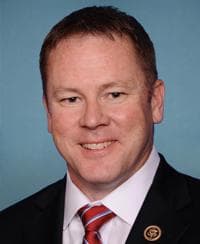
- Introduced
- 5/15/2025
- Last activity
- 5/15/2025 — Referred to the House Committee on Energy and Commerce.
- Sponsored by
- Warren Davidson
- Cosponsors
- - 1 - 0
- Introduced
- In Committee
What this bill would do
This bill, titled the "Trump Derangement Syndrome Research Act of 2025," directs the Director of the National Institutes of Health to study a phenomenon referred to as "Trump Derangement Syndrome" (TDS). The legislation defines TDS as intense emotional or cognitive reactions to Donald J. Trump, his actions, or his public presence. The research is intended to cover the origins, manifestations, and long-term effects of this phenomenon. The Director is tasked with using existing programs within the National Institute of Mental Health and other institutes to conduct this work. Additionally, the Director must collaborate with various agencies and academic institutions. Finally, the bill requires annual reports to be submitted to specific Congressional committees.
Yes
Does this put more money into scientific research?+1
The bill allocates resources toward research into political psychology and media influence.
Does this put more money into medical research?+1
The bill directs the NIH to conduct or support research into a specific psychological phenomenon.
The opposite
No question was scored the opposite.
Who it would affect, and how
Potential Positive Impacts for People
-
Advancing Understanding of Political Behavior: The research aims to provide insights into political polarization, media influence, and psychological responses to public figures (Section 2, Subsection 6).
-
Public Health Insights: Understanding the phenomenon may contribute to broader insights that have implications for public health and social cohesion (Section 2, Subsection 6).
-
Development of Mitigation Strategies: The research objectives include exploring potential interventions, coping mechanisms, or strategies to mitigate the adverse effects of TDS (Section 3, Subsection b, Clause 4).
-
Informing Public Health Strategies: The study of psychological and social factors underlying TDS is intended to inform public health strategies (Section 2, Subsection 7).
Potential Negative Impacts for People
-
Focus on Psychological Impacts: The bill directs research into the long-term psychological, social, or behavioral impacts of TDS on affected individuals or communities (Section 3, Subsection b, Clause 2).
-
Investigation of Social Dynamics: The research involves analyzing contributing factors such as media exposure and political polarization to understand the spread of TDS (Section 3, Subsection b, Clause 3).
Groups and Interests Ranking
Every group the model scored this bill for, from -10 to +10. Hover a score for the reason it gave.
- Education And Technology
- Increases Scientific Research Funding+1
- Healthcare
- Increases Research Funding+1
- 5/15/2025
- Referred to the House Committee on Energy and Commerce.
- 1 Cosponsor added.
- Introduced in House
 Barry Moore
Republican · Alabama