Bill · H.R. 3431· House(119-HR-3431)
Green Energy for Federal Buildings Act
- Introduced
- 5/15/2025
- Last activity
- 5/15/2025 — Referred to the House Committee on Oversight and Government Reform.
- Sponsored by
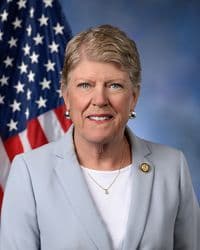
- Julia Brownley
- Cosponsors
- None
- Introduced
- In Committee
What this bill would do
This bill, titled the Green Energy for Federal Buildings Act, aims to amend the Energy Policy Act of 2005. It focuses on updating the Federal purchase requirement for renewable energy. The legislation sets specific targets for the Federal Government to increase its use of renewable energy over several decades. These targets include reaching 35 percent by the 2030s and 75 percent by the 2040s. Ultimately, the bill seeks to ensure the use of 100 percent renewable energy by the year 2050 and every year after.
Yes· 3 of 19
Does this cut the pollution that drives climate change?+7
The bill mandates a significant shift toward 100% renewable energy for federal buildings, which will reduce carbon emissions.
Does this put more money into wind, solar and other renewable power?+6
The bill mandates increased federal procurement of renewable energy sources.
Would Native Americans be better off under this?+5
The bill specifically encourages energy production on Indian land, which could provide economic benefits to Native American communities.
The opposite
No question was scored the opposite.
Who it would affect, and how
Potential Positive Impacts for People
-
Increased Renewable Energy Use: The bill establishes a clear path for the Federal Government to reach 100 percent renewable energy use by the year 2050. This is achieved by setting progressive percentage requirements for fiscal years 2030 through 2039, 2040 through 2049, and 2050 onwards (Section 2).
-
Utilization of Localized Energy Sources: The Secretary is directed to ensure the government consumes renewable energy produced on-site at Federal facilities, on Federal lands, or on Indian land. This could benefit those communities where such energy is produced (Section 2, subsection c).
Potential Negative Impacts for People
- Economic and Technical Constraints: The bill notes that the Secretary must carry out these requirements to the maximum extent that is "economically feasible and technically practicable." This acknowledges that meeting these high percentage requirements could present significant economic or technical challenges (Section 2, subsection c).
Groups and Interests Ranking
Every group the model scored this bill for, from -10 to +10. Hover a score for the reason it gave.
- Demographic And Interest Groups
- Good For Native Americans+5Good For Business Owners+3Good For Rural Residents+3Good For Union Workers+3Good For Children+2Good For Farmers+2Good For African Americans+1Good For Hispanic Americans+1Good For Low Income Households+1Good For Students+1Good For Urban Residents+1Good For Young Adults+1
- Environment Energy And Infrastructure
- Reduces Carbon Emissions+7Increases Renewable Energy Investment+6Improves Environmental Protections+5Improves Public Land Management+3
- Economy And Finance
- Increases Job Creation+3Improves Economic Growth+2
- Governance And Ideology
- Increases Federal Power+3
- 5/15/2025
- Referred to the House Committee on Oversight and Government Reform.
- Introduced in House