Bill · H.R. 3400· House(119-HR-3400)
TRAVEL Act of 2025

- Introduced
- 5/14/2025
- Last activity
- 9/16/2025 — Received in the Senate and Read twice and referred to the Committee on Veterans' Affairs.
- Sponsored by
- Kimberlyn King-Hinds
- Cosponsors
- - 3 - 9
- Introduced
- Passed House
- In Senate committee
What this bill would do
This Act, known as the "TRAVEL Act of 2025," allows the Secretary of Veterans Affairs to assign certain physicians to serve as traveling physicians for up to one year at a time. These physicians can provide health care to veterans in American Samoa, Guam, the Commonwealth of the Northern Mariana Islands, the Commonwealth of Puerto Rico, the Virgin Islands, or other U.S. territories and possessions. The bill provides for these physicians to work at Department or other approved facilities. Traveling physicians are required to coordinate care with non-Department medical providers when necessary. Additionally, the Secretary can provide relocation or retention bonuses to these physicians. Finally, the bill extends certain limits on payments of pension until December 31, 2032.
Yes· 3 of 4
Would veterans be better off under this, taking everything together?+8
The bill significantly benefits veterans by extending pension payment limits and improving healthcare access in territories.
Does this help veterans get medical care?+7
The bill enhances healthcare access for veterans in U.S. territories by authorizing traveling physicians and relocation bonuses.
Does this increase the pay, pensions or support veterans receive?+7
The bill improves benefits by extending limits on pension payments and increasing healthcare access for veterans in territories.
The opposite
No question was scored the opposite.
What Congress actually voted on
One recorded vote has been taken on this bill.
- The House: a fast-track vote, needing two-thirds to passPassed 371–21
The House sets aside its normal procedure to move quickly: no amendments, little debate, and a two-thirds bar instead of a simple majority. It is used for measures expected to be uncontroversial, so a bill that fails here failed despite broad expectations that it would not.
09/15/2025 · Roll call 266 · recorded as “On Motion to Suspend the Rules and Pass, as Amended”
Who it would affect, and how
Potential Positive Impacts for People
-
Increased Medical Access for Veterans in Territories: The Secretary can assign physicians to provide health care to veterans residing in American Samoa, Guam, the Commonwealth of the Northern Mariana Islands, the Commonwealth of Puerto Rico, the Virgin Islands, or other U.S. territories or possessions (Section 2(a)(1)).
-
Coordinated Healthcare Services: Traveling physicians are directed to coordinate with non-Department medical providers to ensure high quality and coordinated care for veterans receiving hospital care and medical services (Section 2(a)(2)(b)).
-
Financial Incentives for Physicians: The Secretary can provide a relocation or retention bonus to traveling physicians in addition to their regular pay (Section 2(a)(2)(c)).
Potential Negative Impacts for People
- Temporary Nature of Physician Assignments: Physician assignments as traveling physicians are limited to periods of not more than one year at a time (Section 2(a)(1)).
Groups and Interests Ranking
Every group the model scored this bill for, from -10 to +10. Hover a score for the reason it gave.
- Healthcare
- Improves Veterans Healthcare+7Improves Healthcare Access+5
- Demographic And Interest Groups
- Good For Veterans+8
- National Security And Foreign Policy
- Improves Veterans Benefits+7
- 9/16/2025
- Received in the Senate and Read twice and referred to the Committee on Veterans' Affairs.
- 9/15/2025
- Motion to reconsider laid on the table Agreed to without objection.
- Passed/agreed to in House: On motion to suspend the rules and pass the bill, as amended Agreed to by the Yeas and Nays: (2/3 required): 371 - 21 (Roll no. 266). (text: CR H4284: 1)
- On motion to suspend the rules and pass the bill, as amended Agreed to by the Yeas and Nays: (2/3 required): 371 - 21 (Roll no. 266). (text: CR H4284)
- Considered as unfinished business. (consideration: CR H4300)
- At the conclusion of debate, the Yeas and Nays were demanded and ordered. Pursuant to the provisions of clause 8, rule XX, the Chair announced that further proceedings on the motion would be postponed.
- DEBATE - The House proceeded with forty minutes of debate on H.R. 3400.
- Considered under suspension of the rules. (consideration: CR H4284)
- Mr. Bost moved to suspend the rules and pass the bill, as amended.
- 9/10/2025
- Reported (Amended) by the Committee on Veterans' Affairs. H. Rept. 119-263.
- Placed on the Union Calendar, Calendar No. 219.
- 9/2/2025
- 1 Cosponsor added.
- 7/29/2025
- 1 Cosponsor added.
- 7/23/2025
- Committee Consideration and Mark-up Session Held
- Ordered to be Reported (Amended) by Voice Vote.
- 7/22/2025
- 1 Cosponsor added.
- 7/15/2025
- 1 Cosponsor added.
- 7/10/2025
- 1 Cosponsor added.
- 7/3/2025
- Subcommittee on Health Discharged
- 6/23/2025
- 1 Cosponsor added.
- 6/17/2025
- 1 Cosponsor added.
- 6/12/2025
- Subcommittee Hearings Held
- 6/9/2025
- 1 Cosponsor added.
- 6/6/2025
- Referred to the Subcommittee on Health.
- 6/3/2025
- 2 Cosponsors added.
- 5/14/2025
- Referred to the House Committee on Veterans' Affairs.
- 2 Cosponsors added.
- Introduced in House
3 bills Congress.gov lists as related to this one — companions in the other chamber, earlier versions, and bills this one absorbed or was folded into.
 Ed Case
Democrat · Hawaii
 Danny Davis
Democrat · Illinois
 Pablo Hernández
Democrat · Puerto Rico
 Jennifer Kiggans
Republican · Virginia
 Susie Lee
Democrat · Nevada
 James Moylan
Republican · Guam
 Sarah McBride
Democrat · Delaware
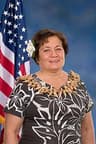 Aumua Amata Radewagen
Republican · American Samoa
 Marilyn Strickland
Democrat · Washington
 Rashida Tlaib
Democrat · Michigan
 Jill Tokuda
Democrat · Hawaii
 Eugene Vindman
Democrat · Virginia