Bill · H.R. 3388· House(119-HR-3388)
Preventing Elected Leaders from Owning Securities and Investments (PELOSI) Act
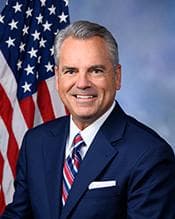
- Introduced
- 5/14/2025
- Last activity
- 5/14/2025 — Referred to the House Committee on House Administration.
- Sponsored by
- Mark Alford
- Cosponsors
- - 1 - 0
- Introduced
- In Committee
What this bill would do
The Preventing Elected Leaders from Owning Securities and Investments (PELOSI) Act aims to prohibit Members of Congress and their spouses from holding or trading certain financial instruments. It defines covered financial instruments to include securities, security futures, commodities, and certain derivatives. The bill includes exceptions for diversified mutual funds, exchange-traded funds, U.S. Treasury bills, notes, or bonds, and certain compensation for spouses or children. Members must certify their compliance annually and submit these certifications to their respective ethics committees for public viewing. The act also establishes penalties such as disgorgement of profits and civil fines for violations. Additionally, it mandates a compliance audit by the Government Accountability Office within two years of enactment.
Yes
Does this make what the government does easier for the public to see?+7
The act requires public disclosure of compliance certifications and ethics committee fine descriptions.
Does this limit the influence of paid lobbyists?+5
The bill increases ethical standards and oversight regarding financial conflicts of interest in Congress.
The opposite
No question was scored the opposite.
Who it would affect, and how
Potential Positive Impacts for People
-
Increased Transparency: Each Member of Congress must submit a written certification of compliance at least annually, which the supervising ethics committees must publish on a publicly available website (Sec. 13163).
-
Accountability through Penalties: Members who violate these rules must disgorge any profit from the transaction to the Treasury of the United States (Sec. 13162(c)(1)).
-
Financial Deterrents for Non-compliance: Ethics committees have the authority to impose civil fines on Members who violate the rules, specifically a penalty equal to 10 percent of the value of the un-divested covered financial instrument (Sec. 13164(a)(3) and (b)(2)(B)).
-
Oversight and Verification: The Comptroller General of the United States is required to conduct an audit of Member compliance and submit a report to the supervising ethics committees within two years of the act's enactment (Sec. 13165).
Potential Negative Impacts for People
-
Restrictions on Personal Investments: Members of Congress and their spouses are prohibited from holding, purchasing, or selling covered financial instruments, which include securities, security futures, and commodities, during their term of service (Sec. 13162(a)).
-
Financial Burdens via Fines: Members and their spouses could face civil fines of 10 percent of the value of a covered financial instrument if they fail to comply with the divestment requirements (Sec. 13164(b)(2)(B)).
-
Loss of Profits: Any profit made from a transaction or holding involving a covered financial instrument that violates this section must be paid back to the Treasury of the United States (Sec. 13162(c)(1)).
Groups and Interests Ranking
Every group the model scored this bill for, from -10 to +10. Hover a score for the reason it gave.
- Governance And Ideology
- Improves Government Transparency+7Reduces Lobbying+5
- 5/15/2025
- 1 Cosponsor added.
- 5/14/2025
- Sponsor introductory remarks on measure. (CR H2041-2042)
- Referred to the House Committee on House Administration.
- Introduced in House
 W. Steube
Republican · Florida