Bill · H.R. 3372· House(119-HR-3372)
Law Enforcement Scenario-Based Training for Safety and De-Escalation Act of 2025
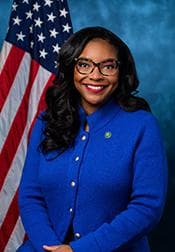
- Introduced
- 5/13/2025
- Last activity
- 5/15/2025 — Sponsor introductory remarks on measure. (CR H2059)
- Sponsored by
- Emilia Sykes
- Cosponsors
- - 2 - 2
- Introduced
What this bill would do
This bill is known as the Law Enforcement Scenario-Based Training for Safety and De-Escalation Act of 2025. It requires the Attorney General to develop a scenario-based training curriculum for law enforcement personnel within one year. The curriculum must address topics such as de-escalation, use of force, and community-police relations. Additionally, the bill authorizes a grant program to help States, local governments, and other entities provide this training. Grant recipients and the Attorney General are required to submit reports to Congress regarding the program. No additional funds are authorized to be appropriated to carry out this Act.
Yes· 3 of 9
Does this change how police departments operate?+7
The bill mandates new training curricula focused on de-escalation, use of force, and community relations.
Would Native Americans be better off under this?+5
The bill specifically mentions grants for Indian Tribal governments to access this training.
Does this narrow racial gaps in how people are treated?+5
The focus on de-escalation and community-police relations can help reduce racial disparities in policing.
The opposite
No question was scored the opposite.
Who it would affect, and how
Potential Positive Impacts for People
-
Section 2 directs the Attorney General to develop a scenario-based training curriculum addressing important topics like de-escalation, crisis intervention, and community-police relations. This could benefit individuals by promoting safer interactions between law enforcement and the public.
-
Section 3 establishes a grant program to provide law enforcement personnel with access to this training curriculum. This might benefit communities by helping officers gain better skills in critical decision-making and problem-solving.
Potential Negative Impacts for People
The provided text does not contain any specific sections or provisions that outline potential negative consequences or burdens for individuals or groups of people in the United States.
Groups and Interests Ranking
Every group the model scored this bill for, from -10 to +10. Hover a score for the reason it gave.
- Demographic And Interest Groups
- Good For Native Americans+5Good For African Americans+4Good For Hispanic Americans+4Good For Low Income Households+3Good For Urban Residents+3
- Social Issues And Justice
- Improves Policing Reform+7Improves Racial Equity+5
- Governance And Ideology
- Improves Government Transparency+4Increases Federal Power+3
- 5/15/2025
- Sponsor introductory remarks on measure. (CR H2059)
- 5/14/2025
- 1 Cosponsor added.
- 5/13/2025
- Referred to the House Committee on the Judiciary.
- 3 Cosponsors added.
- Introduced in House
 Don Bacon
Republican · Nebraska
 Brian Fitzpatrick
Republican · Pennsylvania
 Glenn Ivey
Democrat · Maryland
 Henry Johnson
Democrat · Georgia