Bill · H.R. 3361· House(119-HR-3361)
Collaborative Forest Landscape Restoration Program Reauthorization Act of 2025
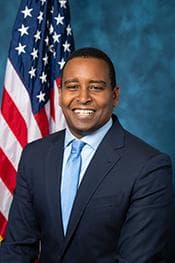
- Introduced
- 5/13/2025
- Last activity
- 5/13/2025 — Referred to the Committee on Agriculture, and in addition to the Committee on Natural Resources, for a period to be subsequently determined by the Speaker, in each case for consideration of such provisions as fall within the jurisdiction of the committee concerned.
- Sponsored by
- Joe Neguse
- Cosponsors
- - 2 - 1
- Introduced
- In Committee
What this bill would do
This bill, known as the "Collaborative Forest Landscape Restoration Program Reauthorization Act of 2025," seeks to amend the Omnibus Public Land Management Act of 2009. The primary goal is to reauthorize the Collaborative Forest Landscape Restoration Program. It introduces changes to how species and pathogens are addressed and adds requirements for monitoring indicators. The act also modifies federal staffing plans to support established collaboratives. Additionally, it expands the scope of proposals to include wildfire risk reduction and watershed health.
Yes· 3 of 6
Does this better protect public land such as parks and forests?+6
The bill strengthens forest landscape restoration and watershed health through increased funding and expanded scope.
Does this better protect air, water and wildlife?+5
The bill enhances ecosystem resilience by addressing wildfire risk and improving watershed health.
Does this improve help for people hit by a disaster?+4
By expanding wildfire risk reduction, the bill serves as a proactive measure against disaster impact.
The opposite
No question was scored the opposite.
Who it would affect, and how
Potential Positive Impacts for People
-
Increased Wildfire Protection: The bill expands the scope of proposals to include those seeking to reduce the risk of uncharacteristic wildfire across State, Tribal, and private lands, as well as within the wildland-urban interface (Section 2, subsection (d)(2)(H)).
-
Improved Water Quality: The bill includes provisions for proposals that seek to enhance watershed health and drinking water sources (Section 2, subsection (d)(2)(I)).
-
Increased Support for Collaboratives: The bill adds a requirement for a Federal Government staffing plan to provide support to established collaboratives (Section 2, subsection (c)(3)(A)(iii)).
-
Expanded Implementation Methods: The bill allows for more innovative implementation mechanisms, such as conservation finance agreements and good neighbor agreements (Section 2, subsection (d)(2)(G)).
-
Increased Funding and Duration: The bill increases specific funding amounts from $4,000,000 to $8,000,000 and extends a date from 2023 to 2034 (Section 2, subsection (f)).
Potential Negative Impacts for People
- No negative impacts are explicitly stated in the provided text.
Groups and Interests Ranking
Every group the model scored this bill for, from -10 to +10. Hover a score for the reason it gave.
- Environment Energy And Infrastructure
- Improves Public Land Management+6Improves Environmental Protections+5Improves Disaster Relief And F E M A+4
- Demographic And Interest Groups
- Good For Rural Residents+4Good For Native Americans+3Good For Urban Residents+3
- 5/13/2025
- Referred to the Committee on Agriculture, and in addition to the Committee on Natural Resources, for a period to be subsequently determined by the Speaker, in each case for consideration of such provisions as fall within the jurisdiction of the committee concerned.
- 3 Cosponsors added.
- Introduced in House
One bill Congress.gov lists as related to this one — companions in the other chamber, earlier versions, and bills this one absorbed or was folded into.
 Kim Schrier
Democrat · Washington
 Andrea Salinas
Democrat · Oregon
 Ryan Zinke
Republican · Montana