Bill · H.R. 3347· House(119-HR-3347)
Sovereign States Emergency Management Act
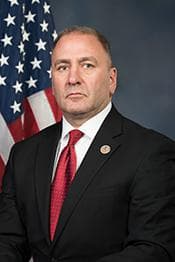
- Introduced
- 5/13/2025
- Last activity
- 5/14/2025 — Referred to the Subcommittee on Emergency Management and Technology.
- Sponsored by
- Clay Higgins
- Cosponsors
- None
- Introduced
- In Committee
What this bill would do
This bill, known as the "Sovereign States Emergency Management Act," seeks to abolish the Federal Emergency Management Agency (FEMA) two years after the act's enactment. It transfers all of FEMA's functions, personnel, and assets to the President and the Executive Office of the President. In place of FEMA, the Secretary of the Treasury will establish a disaster relief block grant program for States. These grants are intended for disaster preparedness, response, and mitigation projects. To receive funds, States must submit annual emergency management plans for approval by the Secretary. The program is set to terminate four years after the Secretary issues the required allocation rule.
Yes
Does this leave more decisions to the states?+7
The bill shifts disaster management authority from a federal agency to individual states through block grants.
Does this make what the government does easier for the public to see?+5
The bill requires states to submit annual reports on fund usage and outcomes to the Secretary of the Treasury.
Does this better protect air, water and wildlife?+4
The bill allows states to use funds specifically for mitigation projects to reduce future disaster risks.
The opposite· 3 of 6
Does this improve help for people hit by a disaster?-6
The bill abolishes FEMA and replaces its permanent functions with a temporary, four-four-year block grant program.
Does this reduce what the federal government spends?-5
The bill abolishes FEMA and replaces its permanent structure with a temporary, four-year block grant program.
Does this make housing cost less?-3
The temporary nature of the disaster relief program may undermine long-term stability in housing-prone disaster areas.
Who it would affect, and how
Potential Positive Impacts for People
-
State Control Over Disaster Funds: States may use grant funds for specific needs including disaster preparedness training, equipment maintenance, response and recovery operations, and mitigation projects to reduce future risks (Section 3(a)(3)).
-
Formula-Based Allocation: The Secretary of the Treasury is required to create a formula for distributing funds that considers population size, historical disaster frequency and severity, geographic risk factors like flood plains or hurricane-s prone areas, and economic need based on per capita income (Section 3(b)(2)).
Potential Negative Impacts for People
-
Abolishment of FEMA: The Federal Emergency Management Agency will be abolished, with its functions and authority transferred to the President (Section 2).
-
Program Termination: The disaster relief block grant program is scheduled to terminate four years after the Secretary issues the rule regarding fund allocation (Section 3(h)).
-
Restrictions on Funding: A State may not receive grant funds if it receives assistance from any other Federal source for the same purposes (Section 3(e)).
-
Administrative Restrictions: States are limited to using no more than 5 percent of their allocated grant amount for administrative costs (Section 3(b)(4)).
Groups and Interests Ranking
Every group the model scored this bill for, from -10 to +10. Hover a score for the reason it gave.
- Governance And Ideology
- Increase States Rights+7Improves Government Transparency+5
- Demographic And Interest Groups
- Good For Low Income Households-2Good For Rural Residents-2Good For Urban Residents-2
- Economy And Finance
- Reduces Government Spending-5
- Social Issues And Justice
- Improves Affordable Housing-3
- Environment Energy And Infrastructure
- Improves Environmental Protections+4Improves Disaster Relief And F E M A-6
- 5/14/2025
- Referred to the Subcommittee on Emergency Management and Technology.
- 5/13/2025
- Referred to the Committee on Transportation and Infrastructure, and in addition to the Committee on Homeland Security, for a period to be subsequently determined by the Speaker, in each case for consideration of such provisions as fall within the jurisdiction of the committee concerned.
- Referred to the Subcommittee on Economic Development, Public Buildings, and Emergency Management.
- Introduced in House