Bill · H.R. 331· House(119-HR-331)
To amend the Aquifer Recharge Flexibility Act to clarify a provision relating to conveyances for aquifer recharge purposes.
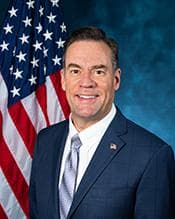
- Introduced
- 1/13/2025
- Last activity
- 9/30/2026 — Committee on Energy and Natural Resources. Ordered to be reported without amendment favorably.
- Sponsored by
- Russ Fulcher
- Cosponsors
- - 1 - 0
- Introduced
- Passed House
- In Senate committee
What this bill would do
This bill amends the Aquifer Recharge Flexibility Act to clarify rules about using existing rights-of-way, easements, and permits for aquifer recharge purposes. Under Section 1(a), a holder may use existing authorizations for aquifer recharge and water transport on behalf of a State, political subdivision of a State, Indian Tribe, or public entity without needing additional authorization from the Secretary. This specific use will not be considered an expansion, modification, or substantial deviation.
Section 1(a) also requires the holder to submit a notice to the Bureau of Land Management at least 30 days before using the existing authorization for aquifer recharge. This notice must identify the entity intending to use it, identify the existing right-of-way or permit, provide details on the intended use and scope, and include a copy of the agreement between the entity and the holder. Additionally, Section 1(b) clarifies that this section does not waive the obligation of the holder to comply with all applicable Federal laws and Bureau policies, nor does it provide authority to construct, modify, or expand any existing infrastructure.
Yes· 3 of 8
Would Native Americans be better off under this?+5
The legislation explicitly mentions Indian Tribes as eligible entities on whose behalf existing rights-of-way can be used for water management.
Would farmers be better off under this?+5
Farmers and agricultural public entities benefit from streamlined access to water transport and aquifer recharge using existing infrastructure.
Would people in rural areas be better off under this?+5
Rural communities relying on effective water transport and aquifer storage stand to benefit from clarified regulatory permissions.
The opposite
No question was scored the opposite.
Who it would affect, and how
Potential Positive Impacts for People
-
Clearer Use for States and Tribes: Section 1(a) allows holders to act for a State, political subdivision of a State, Indian Tribe, or public entity to use existing rights-of-way, easements, permits, or other authorizations for aquifer recharge and water transport without requiring additional authorization from the Secretary. This makes it easier for these groups to utilize existing pathways for water management without getting bogged down by extra official approval.
-
Maintained Environmental and Legal Protections: Section 1(b) explicitly states that the section does not waive the obligation of the holder to comply with all applicable Federal laws and policies of the Bureau. This ensures that existing environmental and legal safeguards remain fully in place while water transport and recharge activities occur.
Potential Negative Impacts for People
- Mandatory Notice Burden: Section 1(a) requires holders to submit a detailed notice to the Bureau of Land Management at least 30 days before using an existing authorization for aquifer recharge, including specific identity information, detailed scope of use, and a copy of the underlying agreement. This creates a bureaucratic reporting burden for holders and entities before they can move forward with their water plans.
Groups and Interests Ranking
Every group the model scored this bill for, from -10 to +10. Hover a score for the reason it gave.
- Demographic And Interest Groups
- Good For Farmers+5Good For Native Americans+5Good For Rural Residents+5
- Environment Energy And Infrastructure
- Improves Rural Development+5Improves Public Land Management+3Improves Environmental Protections+2
- Governance And Ideology
- Increase States Rights+4Improves Government Transparency+3
- 9/30/2026
- Committee on Energy and Natural Resources. Ordered to be reported without amendment favorably.
- 5/14/2025
- Received in the Senate and Read twice and referred to the Committee on Energy and Natural Resources.
- 5/13/2025
- Motion to reconsider laid on the table Agreed to without objection.
- Passed/agreed to in House: On motion to suspend the rules and pass the bill, as amended Agreed to by voice vote. (text: CR H1969)
- On motion to suspend the rules and pass the bill, as amended Agreed to by voice vote. (text: CR H1969)
- Considered under suspension of the rules. (consideration: CR H1969-1970)
- DEBATE - The House proceeded with forty minutes of debate on H.R. 331.
- Mr. Westerman moved to suspend the rules and pass the bill, as amended.
- 4/17/2025
- Reported (Amended) by the Committee on Natural Resources. H. Rept. 119-60.
- Placed on the Union Calendar, Calendar No. 37.
- 2/12/2025
- Subcommittee on Water, Wildlife and Fisheries Discharged
- Committee Consideration and Mark-up Session Held.
- Ordered to be Reported (Amended) by Unanimous Consent.
- 1/23/2025
- Subcommittee Hearings Held
- 1/21/2025
- Referred to the Subcommittee on Water, Wildlife and Fisheries.
- 1/13/2025
- Referred to the House Committee on Natural Resources.
- 1 Cosponsor added.
- Introduced in House
One bill Congress.gov lists as related to this one — companions in the other chamber, earlier versions, and bills this one absorbed or was folded into.
 Michael Simpson
Republican · Idaho