Bill · H.R. 3280· House(119-HR-3280)
Rural Broadband Modernization Act
- Introduced
- 5/8/2025
- Last activity
- 5/8/2025 — Referred to the Committee on Agriculture, and in addition to the Committee on Energy and Commerce, for a period to be subsequently determined by the Speaker, in each case for consideration of such provisions as fall within the jurisdiction of the committee concerned.
- Sponsored by
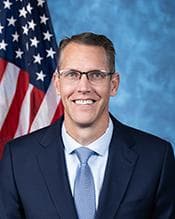
- Randy Feenstra
- Cosponsors
- - 2 - 2
- Introduced
- In Committee
What this bill would do
The Rural Broadband Modernization Act provides grants, loans, and loan guarantees to build or improve broadband services in rural areas. It sets a minimum speed requirement of 100 Mbps symmetrical throughput for rural households. Priority is given to unserved communities and projects that reach the most households. The bill authorizes up to $500 million per year from 2026 through 2030. Eligible entities include state and local governments and Indian tribes.
Yes· 3 of 35
Would people in rural areas be better off under this?+10
The bill is designed exclusively to benefit residents of rural areas by improving broadband access.
Does this get reliable internet to more people?+10
The primary goal of the act is to increase access and minimum speeds for rural broadband.
Does this invest in rural communities?+10
The bill specifically targets the modernization of broadband infrastructure in rural areas.
The opposite
Does this reduce what the federal government spends?-5
The bill allocates up to $2.5 billion in new spending for grants, loans, and guarantees.
Does this reduce what the federal government owes?-2
The bill authorizes $500 million in annual spending from 2026-2030, increasing government expenditures.
Who it would affect, and how
Potential Positive Impacts for People
-
Increased Internet Speeds: The bill requires that funded projects deliver at least 100 Mbps symmetrical throughput for each rural household, improving connectivity (Section 2(c)(1)).
-
Focus on the Most Underserved: Highest priority is given to rural communities that currently lack residential broadband service of at least 25-Mbps downstream and 3-Mbps upstream (Section 2(c)(3)(A)(i)).
-
Support for Vulnerable Groups: Priority is given to rural communities with a high percentage of low income families or persons (Section 2(c)(3)(B)(i)(III)).
-
Agricultural Improvements: The bill provides priority for deployment on cropland and ranchland to support precision agriculture (Section 2(c)(3)(B)(i)(V)).
-
Broad Eligibility: State and local governments, as well as Indian tribes, are eligible to receive assistance to provide these services (Section 2(d)(4)).
-
Technical Support: Between 3% and 5% of funding is dedicated to providing technical assistance and training to help eligible entities prepare applications and manage projects (Section 2(d)(5)).
Potential Negative Impacts for People
-
Funding Limits for Large Providers: Entities that already provide service to at least 20 percent of U.S. households are limited to receiving no more than 15 percent of the available funds in a fiscal year, which may limit the participation of larger providers (Section 2(d)(1)(B)).
-
Matching Fund Requirements: The Secretary may require eligible entities to provide matching funds of up to 10 percent of the requested amount, or more if deemed necessary for financial feasibility (Section 2(d)(3)(A)).
-
Strict Deadlines: Eligible entities must agree to complete the broadband infrastructure buildout within 5 years of approval and receiving initial funds (Section 2(d)(1)(A)(iii)).
Groups and Interests Ranking
Every group the model scored this bill for, from -10 to +10. Hover a score for the reason it gave.
- Demographic And Interest Groups
- Good For Rural Residents+10Good For Farmers+9Good For Native Americans+8Good For Business Owners+7Good For Low Income Households+7Good For Students+7Good For Children+6Good For Seniors+6Good For Middle Aged+5Good For Middle Class Households+5Good For Retirees+5Good For Veterans+5Good For White Americans+5Good For Young Adults+5Good For High Income Households+4Good For People With Disabilities+4Good For African Americans+3Good For Hispanic Americans+3Good For Asian Americans+2Good For Union Workers+2
- Healthcare
- Improves Healthcare Access+5Improves Mental Health Access+3Improves Opioid Crisis Response+2Improves Veterans Healthcare+2
- Education And Technology
- Improves Internet Access+10
- Environment Energy And Infrastructure
- Improves Rural Development+10
- Social Issues And Justice
- Improves Poverty Reduction+4Improves Racial Equity+3Improves Disability Rights+2
- Economy And Finance
- Improves Economic Growth+6Improves Small Business Support+5Increases Job Creation+4Reduces Government Spending-5Reduces National Debt-2
- Governance And Ideology
- Improves Interstate Commerce+3Increases Federal Power+2
- National Security And Foreign Policy
- Improves Veterans Benefits+2
- 3/25/2026
- 1 Cosponsor added.
- 5/8/2025
- Referred to the Committee on Agriculture, and in addition to the Committee on Energy and Commerce, for a period to be subsequently determined by the Speaker, in each case for consideration of such provisions as fall within the jurisdiction of the committee concerned.
- 3 Cosponsors added.
- Introduced in House
 Mike Bost
Republican · Illinois
 Ed Case
Democrat · Hawaii
 Mariannette Miller-Meeks
Republican · Iowa
 Melanie Stansbury
Democrat · New Mexico