Bill · H.R. 3274· House(119-HR-3274)
Child Care Infrastructure Act
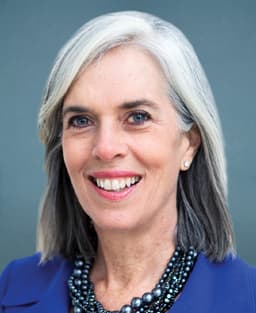
- Introduced
- 5/8/2025
- Last activity
- 5/8/2025 — Referred to the House Committee on Ways and Means.
- Sponsored by
- Katherine Clark
- Cosponsors
- - 9 - 0
- Introduced
- In Committee
What this bill would do
The Child Care Infrastructure Act aims to provide assistance for improving child care facilities across the United States. The bill directs the Secretary to conduct immediate and long-term needs assessments regarding the condition of child care centers and the impacts of the COVID-19 pandemic. It establishes a grant program where the Secretary can award funds to States to help providers acquire, construct, renovate, or expand their facilities. Additionally, the Secretary may award grants to intermediary organizations to provide technical and financial assistance. The legislation also mandates specific labor standards for all construction and renovation work funded by these grants.
Yes· 3 of 19
Would children be better off under this?+8
The bill focuses on improving facilities for infants, toddlers, and young children.
Does this make child care cost less?+7
The bill invests heavily in infrastructure to increase capacity and improve facility conditions for child care.
Would households on low incomes be better off under this?+6
The bill prioritizes child care facilities that serve low-income populations.
The opposite
No question was scored the opposite.
Who it would affect, and how
Potential Positive Impacts for People
-
Improved Child Care Facilities: The bill allows for grants to help providers acquire, construct, renovate, or improve facilities, which includes adapting or expanding them (Section 2(c)(1)(A)).
-
Support for Low-Income and Underserved Families: States are required to prioritize grants for facilities serving low-income populations and those located in rural or underserved communities (Section 2(c)(1)(B)).
-
Support for Infants and Toddlers: Grant prioritization includes facilities that primarily serve children under the age of 5, specifically those with a high percentage of infants and toddlers enrolled (Section 2(c)(1)(B)(ii)).
-
Increased Capacity for Young Children: Funds are directed toward facilities that are currently unable to serve more children or those that had to reduce capacity due to inadequate facility conditions (Section 2(c)(1)(B)(iii)).
-
Flexibility for Working Families: The bill prioritizes facilities that operate under nontraditional hours (Section 2(c)(1)(B)(iv)).
-
Fair Wages for Workers: All laborers and mechanics working on construction or renovation projects funded by these grants must be paid at rates not less than those prevailing in the locality, following the Davis-Bacon Act (Section 2(d)(1)).
-
Resources for Indian Tribes and Territories: The Secretary must reserve 3 percent of the total funds for payments to Indian tribes and 3 percent for payments to territories (Section 2(e)(2)).
Potential Negative Impacts for People
- Matching Fund Requirement for States: Except for Indian tribes, States must agree to provide matching contributions (directly or through donations) equal to 10 percent of the grant funds (Section 2(c)(1)(H)(i)).
Groups and Interests Ranking
Every group the model scored this bill for, from -10 to +10. Hover a score for the reason it gave.
- Demographic And Interest Groups
- Good For Children+8Good For Low Income Households+6Good For Rural Residents+5Good For Union Workers+5Good For Native Americans+4Good For People With Disabilities+4Good For Women+3Good For Business Owners+2Good For Middle Class Households+2
- Social Issues And Justice
- Improves Childcare Affordability+7Improves Poverty Reduction+4Improves Disability Rights+3
- Economy And Finance
- Improves Union Protections+5Improves Small Business Support+3Increases Job Creation+3Improves Economic Growth+2
- Environment Energy And Infrastructure
- Improves Rural Development+5
- Governance And Ideology
- Improves Government Transparency+3Increases Federal Power+2
- 5/19/2026
- 1 Cosponsor added.
- 4/23/2026
- 1 Cosponsor added.
- 7/23/2025
- 2 Cosponsors added.
- 5/8/2025
- Referred to the House Committee on Ways and Means.
- 5 Cosponsors added.
- Introduced in House
 Suzanne Bonamici
Democrat · Oregon
 Jimmy Gomez
Democrat · California
 Jennifer McClellan
Democrat · Virginia
 Sarah McBride
Democrat · Delaware
 Chris Pappas
Democrat · New Hampshire
 Brittany Pettersen
Democrat · Colorado
 Mary Gay Scanlon
Democrat · Pennsylvania
 Greg Stanton
Democrat · Arizona
 Jill Tokuda
Democrat · Hawaii