Bill · H.R. 3265· House(119-HR-3265)
Protecting our Students in Schools Act of 2025
- Introduced
- 5/8/2025
- Last activity
- 5/8/2025 — Referred to the Committee on Education and Workforce, and in addition to the Committee on Armed Services, for a period to be subsequently determined by the Speaker, in each case for consideration of such provisions as fall within the jurisdiction of the committee concerned.
- Sponsored by
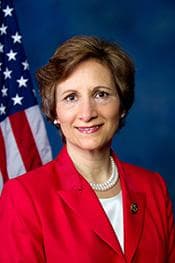
- Suzanne Bonamici
- Cosponsors
- - 21 - 0
- Introduced
- In Committee
What this bill would do
The Protecting our Students in Schools Act of 2025 prohibits corporal punishment for students in any program receiving Federal financial assistance. It allows students and parents to file civil actions for violations and authorizes the Attorney General to take legal action. The bill establishes an enforcement process through the Office for Civil Rights, which may include withholding funds from non-compliant programs. It requires states to provide school climate reports and mandates notifications to parents and authorities when corporal punishment occurs. Additionally, the Act provides grant funding to help schools implement positive behavioral interventions and supports.
Yes· 3 of 24
Would students be better off under this?+10
Directly prohibits physical punishment and funds positive behavioral support systems.
Would children be better off under this?+9
Protects children from physical pain and corporal punishment in educational settings.
Would people with disabilities be better off under this?+9
Strong protections and mandatory notifications to protection and advocacy systems for students with disabilities.
The opposite
Does this leave more decisions to the states?-5
Imposes federal mandates on states and threatens to withhold funds for non-compliance.
Does this reduce what the federal government owes?-1
The bill authorizes appropriations for grants and administrative costs, slightly increasing government spending.
Does this reduce what the federal government spends?-1
The bill authorizes new spending for grants to state educational agencies.
Who it would affect, and how
Potential Positive Impacts for People
-
Protection from Physical Pain: The bill prohibits program personnel, law enforcement officers, and school security guards from using corporal punishment, which is defined as acts causing physical pain for discipline, such as striking, spanking, or paddling (Section 101(a)).
-
Legal Recourse for Families: Students or parents who experience corporal punishment can file civil actions in Federal or State court for compensatory damages, injunctive relief, and fees (Section 101(b)).
-
Increased Transparency: Programs must notify parents, state educational agencies, and local law enforcement in writing within 24 hours if a student is subjected to corporal punishment (Section 104(a)).
-
Additional Protections for Students with Disabilities: For students with disabilities, programs must also notify the relevant protection and advocacy system within 24 hours of the use of force (Section 104(b)).
-
Support for Better School Environments: The bill provides grants to help states and local agencies implement positive behavioral interventions, restorative justice, trauma-informed care, and implicit bias training to improve school culture (Section 202(a), (c)).
Potential Negative Impacts for People
- Loss of School Funding: The Secretary of Education can withhold Federal payments from programs or state educational agencies that fail to comply with the Act (Section 103(c), Section 201(e)).
Groups and Interests Ranking
Every group the model scored this bill for, from -10 to +10. Hover a score for the reason it gave.
- Demographic And Interest Groups
- Good For Students+10Good For Children+9Good For People With Disabilities+9Good For African Americans+8Good For Asian Americans+8Good For Hispanic Americans+8Good For Native Americans+8Good For High Income Households+5Good For L G B T Q Community+5Good For Low Income Households+5Good For Middle Class Households+5Good For Rural Residents+5Good For White Americans+5
- Social Issues And Justice
- Improves Disability Rights+7Improves Racial Equity+6Improves Policing Reform+4Improves Gender Equality+3Improves L G B T Q Rights+3
- Governance And Ideology
- Improves Due Process+5Increases Federal Power+5Improves Government Transparency+4Increase States Rights-5
- Healthcare
- Improves Mental Health Access+4Increases Research Funding+2
- Education And Technology
- Increases Public School Funding+5
- Economy And Finance
- Reduces Government Spending-1Reduces National Debt-1
- 5/15/2025
- 1 Cosponsor added.
- 5/13/2025
- 1 Cosponsor added.
- 5/8/2025
- Referred to the Committee on Education and Workforce, and in addition to the Committee on Armed Services, for a period to be subsequently determined by the Speaker, in each case for consideration of such provisions as fall within the jurisdiction of the committee concerned.
- 19 Cosponsors added.
- Introduced in House
5 bills Congress.gov lists as related to this one — companions in the other chamber, earlier versions, and bills this one absorbed or was folded into.
 Donald Beyer
Democrat · Virginia
 Joe Courtney
Democrat · Connecticut
 Judy Chu
Democrat · California
 Sheila Cherfilus-McCormick
Democrat · Florida
 Danny Davis
Democrat · Illinois
 Mark DeSaulnier
Democrat · California
 Jahana Hayes
Democrat · Connecticut
 Pramila Jayapal
Democrat · Washington
 William Keating
Democrat · Massachusetts
 Stephen Lynch
Democrat · Massachusetts
 Gwen Moore
Democrat · Wisconsin
 Lucy McBath
Democrat · Georgia
 Jennifer McClellan
Democrat · Virginia
 Ilhan Omar
Democrat · Minnesota
 Chellie Pingree
Democrat · Maine
 Mark Pocan
Democrat · Wisconsin
 Darren Soto
Democrat · Florida
 Mary Gay Scanlon
Democrat · Pennsylvania
 Mark Takano
Democrat · California
 Jill Tokuda
Democrat · Hawaii
 Bonnie Watson Coleman
Democrat · New Jersey