Bill · H.R. 3227· House(119-HR-3227)
Farm Workforce Modernization Act of 2025
- Introduced
- 5/7/2025
- Last activity
- 5/7/2025 — Referred to the Committee on the Judiciary, and in addition to the Committees on Ways and Means, Education and Workforce, and Financial Services, for a period to be subsequently determined by the Speaker, in each case for consideration of such provisions as fall within the jurisdiction of the committee concerned.
- Sponsored by
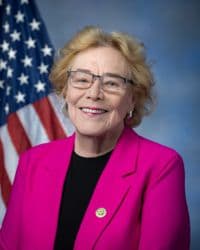
- Zoe Lofgren
- Cosponsors
- - 7 - 4
- Introduced
- In Committee
What this bill would do
The Farm Workforce Modernization Act of 2025 aims to amend the Immigration and Nationality Act to regulate nonimmigrant agricultural workers. It creates a "certified agricultural worker" status and provides a pathway for long-term workers to adjust their status to lawful permanent residents. The bill seeks to reform the H-2A temporary worker program through a streamlined electronic platform and a portable visa pilot program. Additionally, it establishes an electronic employment eligibility verification system to replace the existing E-Verify framework. The legislation includes provisions for worker housing preservation, increased accountability for foreign labor recruiters, and requirements for reporting on system implementation.
Yes· 3 of 16
Does this make it easier for immigrants already here to become citizens?+6
The bill creates legal status and residency opportunities for many agricultural workers.
Does this make housing cost less?+6
The bill funds the preservation of rural multifamily rental housing and provides rural housing vouchers.
Would households on low incomes be better off under this?+4
The bill provides housing preservation, vouchers, and a fund for wage loss due to government error.
The opposite· 3 of 4
Does this leave more decisions to the states?-5
The bill explicitly preempts many state and local laws regarding employment status verification.
Would business owners be better off under this?-4
The bill increases regulatory burdens, bond requirements, and oversight for agricultural employers.
Would farmers be better off under this?-4
The bill imposes new costs through surety bonds, mandatory wage disclosures, and stricter oversight.
Who it would affect, and how
Potential Positive Impacts for People
-
Path to Legal Status for Workers: The bill allows certain workers to obtain "certified agricultural worker status" if they have performed at least 1,035 hours or 180 work days of agricultural labor in the preceding two years (Section 101(a)(1)(A)).
-
Family Stability: Spouses and children of certified agricultural workers may be granted "certified agricultural dependent status" (Section 101(a)(2)).
-
Path to Permanent Residency: Long-term workers may adjust their status to that of a lawful permanent resident after several years of service (Section 111(a)(1)).
-
Protection for Families in Specific Circumstances: The Secretary of Homeland Security may establish procedures for spouses or children to self-petition for permanent residence in cases involving the death of the worker or instances of extreme cruelty (Section 111(a)(2)(B)).
-
Travel Flexibility: Certified agricultural workers and their dependents may travel both within and outside of the United States and can be admitted upon return without first obtaining a visa (Section 102(a)(4)).
-
Workplace Safety Protections: H-2A employers are required to maintain a written heat illness prevention plan that includes access to water, shade, and breaks (Section 202(g)(1)).
-
Travel Reimbursement: H-2A workers are entitled to reimbursement for transportation and subsistence costs when completing a certain percentage of their employment period (Section 202(f)(1)).
-
Worker Rights and Protections: H-2A workers are guaranteed the same rights and remedies under Federal, State, or local labor laws as United States agricultural workers (Section 204(a)).
-
Dispute Resolution: The Federal Mediation and Conciliation Service will provide free mediation services to help resolve disputes between H-2A workers and agricultural employers (Section 204(b)(3)(A)).
-
Increased Mobility for Workers: The portable H-2A visa pilot program allows designated workers to move more freely between registered agricultural employers (Section 206(a)).
-
Job Searching Tools: An online electronic platform will be maintained to help portable H-2A workers find available job opportunities (Section 206(a)(2)).
-
Housing Stability for Low-Income Residents: The Housing Preservation and Revitalization Program provides resources to ensure projects can continue providing safe and affordable housing for low-income residents and farm laborers (Section 221(c)).
-
Protection Against Unfair Recruitment: Foreign labor recruiters are prohibited from assessing recruitment fees on workers and must disclose employer identities and job terms in writing (Section 251(c)).
-
Recourse for Verification Errors: Individuals can seek compensation for lost wages if a termination was the result of a government error or omission during the electronic verification process (Section 301(b)(4)(F)(ii)).
-
Increased Accountability and Oversight: The Secretary must submit a report to Congress that assesses the accuracy of the electronic employment verification system, including nonconfirmation notices issued to employment-authorized individuals (Section 307(1)).
-
Support for Small Businesses and Individuals: The report must assess challenges faced by persons, entities, and small employers in using the System (Section 307(2)).
-
Protection Against Unfair Practices: The bill requires an assessment of the incidence of unfair immigration-related employment practices related to the System's use (Section 307(4)).
-
Improved Security and Fraud Prevention: The Secretary must report on the effectiveness of photo matching and identity authentication tools at preventing identity fraud and misuse of information (Section 307(5)(B)).
-
Streamlined Employment Processes: The Secretary is tasked with creating a plan to modernize the verification process, which includes proposing a simplified process that could allow employers to verify identity and authorization without completing or retaining Form I-9 (Section 308(2)).
-
Access to Electronic Formats: All forms necessary to implement this title must be available in both paper and electronic formats to facilitate electronic completion and storage (Section 309(b)(2)).
Potential Negative Impacts for People
-
Ineligibility Due to Criminal History: Individuals may be ineligible for status if they have been convicted of certain crimes, such as any felony or multiple misdemeanors involving moral turpitude (Section 101(b)(2)).
-
Restrictions on Public Benefits: Individuals granted certified agricultural worker or dependent status are ineligible for Federal means-tested public benefits (Section 102(c)(1)).
-
Tax and Health Care Limitations: Such workers are not entitled to the premium assistance tax credit and are subject to specific rules regarding health care coverage (Section 102(c)(2-3)).
-
Costs for Adjustment of Status: Workers seeking to adjust their status to lawful permanent resident must pay a $1,000 penalty fee (Section 111(b)).
-
Employment Guarantees and Limitations: While H-2A workers are guaranteed a certain amount of work, they may lose their right to this guarantee if they voluntarily abandon employment without good cause (Section s202(g)(6)(C)).
-
Employer Liability for Records: Employers face civil penalties of up to $500 if they knowingly fail to provide required annual written records of employment to certified agricultural workers (Section 105(b)(1)).
-
Regulatory Burden for Employers: Farm labor contractors must maintain surety bonds to ensure they can meet financial obligations like paying wages (Section 204(c)(1)(A)).
-
Strict Compliance for Recruiters: Foreign labor recruiters face strict registration requirements, mandatory bonds, and potential fines or revocation of registration for violations (Section 251).
-
Potential Job Loss During Verification: Under the new electronic verification system, an employer may terminate employment upon receiving a final nonconfirmation of a worker's status (Section s 301(b)(4)(E)(ii)).
-
Mandatory Verification Requirements: Employers in the agricultural industry will eventually be required to use the new electronic verification system for all hires (Section 302(a)).
-
Burden of Challenges in Verification: The bill acknowledges that individuals, entities, and small employers may face challenges when utilizing the electronic system or its identity authentication tools (Section 307(2), 307(3), and 307(5)(C)).
-
Risk of Improper System Use: There is a need to monitor the degree to which persons and entities misuse the System, such as using it before a hire date or using it for unauthorized purposes (Section 307(6)(C)).
-
Impact on Specific Industries: The bill notes that the implementation of the system may have an impact on the agricultural industry and its hiring practices (Section 307(7)).
Groups and Interests Ranking
Every group the model scored this bill for, from -10 to +10. Hover a score for the reason it gave.
- Social Issues And Justice
- Improves Affordable Housing+6Improves Pathway To Citizenship+6Improves Border Security+2
- Demographic And Interest Groups
- Good For Low Income Households+4Good For Rural Residents+4Good For Children+3Good For Immigrants+3Good For Hispanic Americans+2Good For Business Owners-4Good For Farmers-4
- Governance And Ideology
- Increases Federal Power+4Improves Due Process+3Improves Government Transparency+2Improves Privacy Rights+1Increase States Rights-5
- Environment Energy And Infrastructure
- Improves Rural Development+4
- Education And Technology
- Improves Data Privacy+2
- Economy And Finance
- Increases Job Creation+3Improves Economic Growth+2Improves Small Business Support-4
- 3/25/2026
- 1 Cosponsor added.
- 1/20/2026
- 1 Cosponsor added.
- 10/3/2025
- 1 Cosponsor added.
- 6/30/2025
- 3 Cosponsors added.
- 5/7/2025
- Referred to the Committee on the Judiciary, and in addition to the Committees on Ways and Means, Education and Workforce, and Financial Services, for a period to be subsequently determined by the Speaker, in each case for consideration of such provisions as fall within the jurisdiction of the committee concerned.
- 5 Cosponsors added.
- Introduced in House
 Jim Costa
Democrat · California
 Salud Carbajal
Democrat · California
 Adam Gray
Democrat · California
 Josh Harder
Democrat · California
 Dan Newhouse
Republican · Washington
 Maria Salazar
Republican · Florida
 Michael Simpson
Republican · Idaho
 Kim Schrier
Democrat · Washington
 Andrea Salinas
Democrat · Oregon
 David Valadao
Republican · California
 Eugene Vindman
Democrat · Virginia