Bill · H.R. 3220· House(119-HR-3220)
Quantum Sandbox for Near-Term Applications Act of 2025
- Introduced
- 5/6/2025
- Last activity
- 5/6/2025 — Referred to the House Committee on Science, Space, and Technology.
- Sponsored by
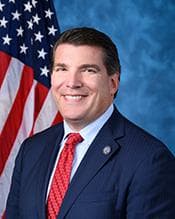
- Jay Obernolte
- Cosponsors
- - 7 - 3
- Introduced
- In Committee
What this bill would do
This bill is called the "Quantum Sandbox for Near-Term Applications Act of 2025." It amends the National Quantum Initiative Act to create a public-private partnership. This partnership will establish a "quantum sandbox" to develop and test quantum applications for use cases that can be deployed in less than 24 months. The Secretary of Commerce and the Director of the National Institute of Standards and Technology are responsible for setting this up. They will work with groups like the Quantum Economic Development Consortium and National Laboratories.
Yes· 3 of 15
Would business owners be better off under this?+7
Provides a 'sandbox' and removes barriers to accessing quantum hardware.
Does this put more money into scientific research?+7
The bill establishes a public-private partnership to accelerate quantum application development.
Would people in their twenties and thirties be better off under this?+6
Focus on workforce development for next-generation leaders in a cutting-edge field.
The opposite
No question was scored the opposite.
Who it would affect, and how
Potential Positive Impacts for People
-
Economic and Consumer Benefits: Business and consumers in the United States may see benefits from innovation focusing on the near-term use of quantum technology (Sec. 2).
-
Economic Security: Leadership in quantum research and near-term development is expected to have a great impact on the economic security of the United States (Sec. 2).
-
Increased Access: A program focused on near-term quantum application acceleration can help break down barriers to accessing quantum computing hardware systems (Sec. 2).
-
Workforce Growth: The bill identifies that excellence in workforce development is key to creating next-generation leaders in quantum applications (Sec. 2).
Potential Negative Impacts for People
- No negative impacts for people are explicitly mentioned in the provided text.
Groups and Interests Ranking
Every group the model scored this bill for, from -10 to +10. Hover a score for the reason it gave.
- Demographic And Interest Groups
- Good For Business Owners+7Good For Students+6Good For Young Adults+6Good For Billionaires+4Good For High Income Households+4Good For High Net Worth Individuals+4Good For Middle Aged+4Good For Ultra High Net Worth Individuals+4Good For Middle Class Households+3
- Economy And Finance
- Improves Economic Growth+6Increases Job Creation+5Improves Small Business Support+4
- Education And Technology
- Increases Scientific Research Funding+7
- National Security And Foreign Policy
- Improves Cybersecurity Defense+3
- Governance And Ideology
- Increases Federal Power+2
- 1/8/2026
- 1 Cosponsor added.
- 11/17/2025
- 1 Cosponsor added.
- 9/9/2025
- 1 Cosponsor added.
- 7/10/2025
- 1 Cosponsor added.
- 6/11/2025
- 1 Cosponsor added.
- 6/5/2025
- 1 Cosponsor added.
- 6/3/2025
- 1 Cosponsor added.
- 5/6/2025
- Referred to the House Committee on Science, Space, and Technology.
- 3 Cosponsors added.
- Introduced in House
One bill Congress.gov lists as related to this one — companions in the other chamber, earlier versions, and bills this one absorbed or was folded into.
 Randy Feenstra
Republican · Iowa
 Charles Fleischmann
Republican · Tennessee
 Richard Hudson
Republican · North Carolina
 Ro Khanna
Democrat · California
 Thomas Kean
Republican · New Jersey
 Max Miller
Republican · Ohio
 Zachary Nunn
Republican · Iowa
 Haley Stevens
Democrat · Michigan
 Eugene Vindman
Democrat · Virginia
 Randy Weber
Republican · Texas