Bill · H.R. 3217· House(119-HR-3217)
Stop Child Hunger Act of 2025
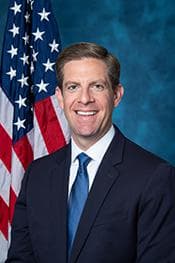
- Introduced
- 5/6/2025
- Last activity
- 5/6/2025 — Referred to the House Committee on Education and Workforce.
- Sponsored by
- Mike Levin
- Cosponsors
- - 3 - 0
- Introduced
- In Committee
What this bill would do
The ``Stop Child Hunger Act of 2025'' seeks to amend the Richard B. Russell National School Lunch Act. It focuses on expanding the summer electronic benefits transfer for children program. This expansion would include benefit transfers during school closure periods. A school closure period is defined as when a school is closed, remote, or hybrid for five or more consecutive weekdays. The bill also establishes a grant program to help states upgrade data systems for implementation.
Yes· 3 of 5
Would children be better off under this?+7
The bill expands food assistance to ensure children receive nutrition during school closures or remote learning periods.
Would households on low incomes be better off under this?+6
Low-income families will receive additional electronic benefit transfers for children during school closures.
Would students be better off under this?+6
Students will have access to food benefits during school closure periods such as remote or hybrid learning.
The opposite
Does this reduce what the federal government spends?-1
The bill increases federal spending through a $50,000,000 transfer for implementation grants and expanded benefit coverage.
Who it would affect, and how
Potential Positive Impacts for People
-
Expanded Food Benefits: The bill expands benefit transfers to include school closure periods, not just summer months (Section 2, subsection (a) and (b)). This ensures children can receive benefit amounts not less than the value of breakfast, lunch, and a snack at the free rate for days when schools are closed (Section 2, subsection (b)).
-
Support for Data Systems: The Secretary will carry out a program to provide grants to States for developing or upgrading data systems necessary to implement the program (Section 2, subsection (d), paragraph (6)(i)).
-
Initial Funding for Implementation: A $50,000,000 transfer will be made to the Secretary on October 1, 2025, to support the implementation grant program (Section 2, subsection (d), paragraph (6)(ii)).
Potential Negative Impacts for People
- Decreasing Administrative Support: While the Secretary pays for administrative expenses, the percentage of these expenses covered by the government decreases over time. It starts at 100 percent for fiscal year 2026 and drops to 50 percent by fiscal year 2031 (Section 2, subsection (d), paragraph (4)(A)).
Groups and Interests Ranking
Every group the model scored this bill for, from -10 to +10. Hover a score for the reason it gave.
- Demographic And Interest Groups
- Good For Children+7Good For Low Income Households+6Good For Students+6
- Social Issues And Justice
- Improves Poverty Reduction+5
- Education And Technology
- Increases Public School Funding+4
- Economy And Finance
- Reduces Government Spending-1
- 7/27/2026
- 1 Cosponsor added.
- 5/29/2026
- 1 Cosponsor added.
- 5/6/2025
- Referred to the House Committee on Education and Workforce.
- 1 Cosponsor added.
- Introduced in House
One bill Congress.gov lists as related to this one — companions in the other chamber, earlier versions, and bills this one absorbed or was folded into.
 Jahana Hayes
Democrat · Connecticut
 Gwen Moore
Democrat · Wisconsin
 Kim Schrier
Democrat · Washington